
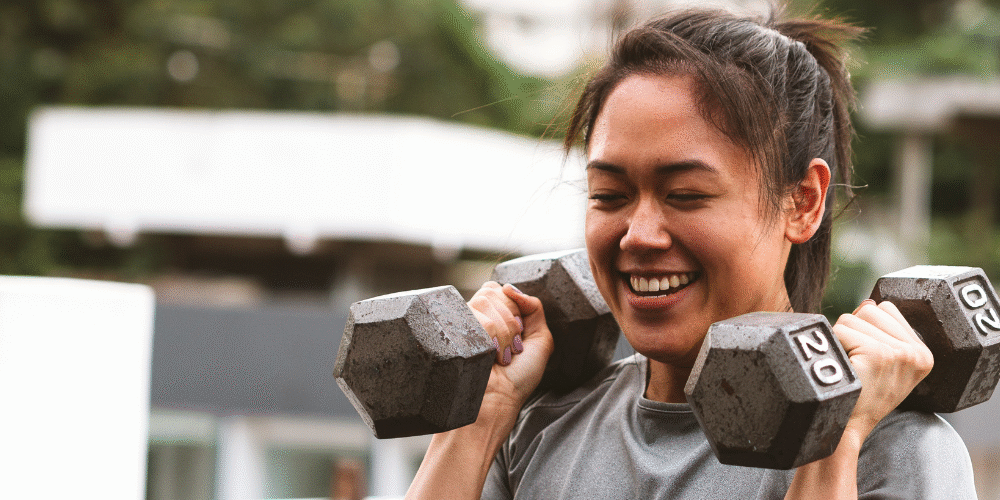
Starting a strength training journey can feel intimidating, especially for women over 40 who may be new to the gym environment. But here’s the good news: it’s never too late to begin building muscle mass and improving your overall health through weight training. Let’s dive into my strength training for women beginners guide!
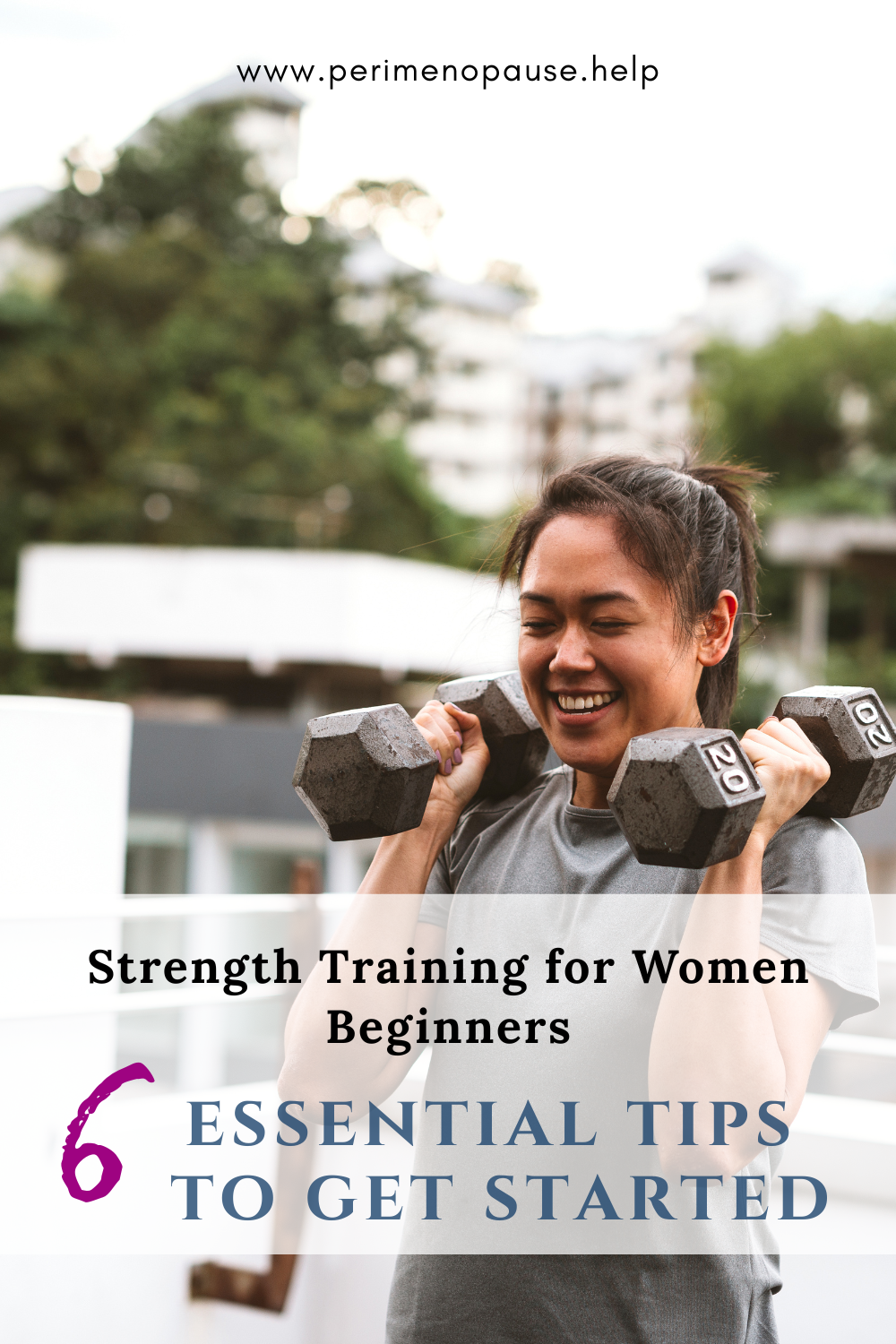
If you are looking to start a new strength training program but don’t know where to begin you have come to the right place- we will review why it matters, what you need before you begin, the foundational moves and exercises, and provide you a sample 4 week plan. Now let’s get started!
This blog is all about strength training for women beginners.
This blog contains affiliate links, for which I may receive a small commission, at no additional charge to you.
1. Why Strength Training Matters for Women at Every Age
Strength training offers tremendous benefits for women, particularly as we age. Regular resistance training significantly improves bone density, which naturally decreases after menopause, reducing the risk of osteoporosis.
It also helps build muscle mass, which we also lose in late perimenopause and beyond.
Beyond the physical transformation, strength training positively impacts your metabolic rate, helping with weight loss and management. Studies show that women who do regular strength workouts experience improved blood pressure, lower heart rate, and a better mood through endorphin release.
The benefits extend to daily life too – carrying groceries, playing with kids, or climbing stairs becomes easier as your muscle strength increases. Remember, building muscles isn’t just about aesthetics; it’s about creating a functional, capable body that serves you well through all stages of life.
2. What You Need Before You Begin
Starting your strength training journey doesn’t require fancy equipment or an expensive gym membership. Here’s what you’ll actually need:
- Comfortable, supportive athletic shoes. These can be cross trainers or sport specific shoes, but they don’t need to be fancy.
- Breathable workout clothes that allow full range of motion
- A set of dumbbells (start with lighter weights – 2-5 pounds) can be helpful but you can actually get a good strength training workout by just using body weight if you prefer
- Resistance bands (a versatile, inexpensive option) can be helpful too
- A sturdy chair or bench for supported exercises
Check out some of my favorite strength training basics that are quite affordable and can get you a great workout:
No products found.
No products found.
No products found.
No products found.
While equipment is helpful, many effective exercises use your own bodyweight as resistance as noted above. The most important requirement is consistency and dedication to your new routine.
If possible, consider investing in 1-2 sessions with a personal trainer who can teach you proper form and create a customized plan based on your fitness goals and experience level. This initial guidance can prevent injury and set you up for long-term success, but this is by no means necessary.
3. Master the Six Foundational Movement Patterns
Before jumping into specific exercises, understanding the fundamental movement patterns will help you build a balanced, effective workout routine, and help prevent injury. These six patterns form the foundation of all strength training:
- Push – Moving weight away from your body (chest press, shoulder press)
- Pull – Drawing weight toward your body (rows, pull-ups)
- Hinge – Bending forward at the hips (deadlifts)
- Squat – Bending at knees and hips (squats, lunges)
- Carry – Holding weight while moving (farmer’s carries)
- Rotation/Anti-rotation – Twisting or resisting twisting (wood chops)
By incorporating exercises from each category, you’ll ensure you’re training your entire body in different ways that mimic movements in daily life. This balanced approach prevents overuse injuries and creates functional strength that translates beyond the gym.
4. Best Beginner Strength Exercises for Women
When starting your strength training journey, focus on these fundamental exercises that target all major muscle groups:
- Squats – Stand with feet shoulder-width apart, lower your body as if sitting in a chair, keeping your back straight and knees behind toes.
- Modified Push-Ups – Begin on your knees with hands slightly wider than shoulders, lower your chest toward the floor while maintaining a straight line from head to knees.
- Dumbbell Rows – With a dumbbell in one hand, support yourself on a bench with the opposite hand and knee, pull the weight up toward your shoulder blade.
- Glute Bridges – Lie on your back with knees bent and feet flat, lift hips toward the ceiling by squeezing your glutes.
- Shoulder Press – Sitting or standing, hold dumbbells at shoulder height and press them overhead until arms are extended.
- Planks – Hold a push-up position (or modified on forearms) with your body in a straight line, engaging your core. Start by holding for 10 seconds, then work your way up to 20, then 30 seconds.
- Lunges – Step forward with right foot, lowering until both knees form 90-degree angles, then push back to start position. Repeat with left leg.
- Bicep Curls – Standing with arms at sides holding dumbbells, bend at elbows to bring weights toward shoulders.
- Tricep Curls (Tricep Extensions) – Stand or sit with a dumbbell held in both hands overhead. Keep your elbows close to your ears as you bend your elbows and lower the weight behind your head. Extend your arms back up to the starting position by engaging the triceps. Keep your core tight and avoid arching your back.
Start with lighter weights and focus on mastering proper form before increasing resistance. Aim for 8-12 repetitions of each exercise, performing 2-3 sets with rest between sets.
5. How to Build a Beginner Strength Training Plan
Creating an effective strength training plan doesn’t need to be complicated. Here’s a simple framework to get you started:
- Frequency: Aim for 2-3 strength workouts per week with at least one rest day between sessions to allow muscles to recover.
- Duration: Begin with 20-30 minute sessions and gradually increase to 45-60 minutes as your endurance improves.
- Structure: Each workout should include:
- 5-minute warm-up (light cardio to raise heart rate)
- Main strength exercises (covering major muscle groups). It’s best to work opposing muscle groups in order and start with the larger muscle groups. For example- Start with Planks then Modified Push Ups; Squats then Lunges; Shoulder press; then Glute Bridges; then Bicep Curls and Triceps extensions.
- 5-minute cool-down (gentle stretching)
- Progression: Start with your own bodyweight or light weights, focusing on form. Once you can complete 12-15 repetitions with good form, increase weight slightly.
- Balance: Incorporate both compound movements (working multiple muscle groups) and isolation exercises (targeting specific muscles).
For beginners, full body workouts are the best way to start rather than splitting routines by body part. This approach ensures you’re training all major muscle groups consistently while allowing adequate recovery time.
6. Four-Week Strength Program for Beginners
Here’s a simple four-week strength training program to get you started on your fitness journey:
Week 1: Foundation Building – Monday: 20-minute full body workout (bodyweight exercises only) – Wednesday: 20-minute full body workout (bodyweight exercises only) – Friday: 20-minute full body workout (bodyweight exercises only) – Daily: 10-15 minute walk
Week 2: Adding Resistance – Monday: 25-minute full body workout (add light weights or resistance bands) – Wednesday: 25-minute full body workout (add light weights or resistance bands) – Friday: 25-minute full body workout (add light weights or resistance bands) – Daily: 15-20 minute walk
Week 3: Building Endurance – Monday: 30-minute full body workout (increase repetitions) – Wednesday: 30-minute full body workout (increase repetitions) – Friday: 30-minute full body workout (increase repetitions) – Daily: 20-25 minute walk
Week 4: Progressive Overload – Monday: 30-minute full body workout (slightly increase weights) – Wednesday: 30-minute full body workout (slightly increase weights) – Friday: 30-minute full body workout (slightly increase weights) – Daily: 25-30 minute walk
Sample Workout: 1. Bodyweight squats: 10-12 reps 2. Modified push-ups: 8-10 reps 3. Glute bridges: 12-15 reps 4. Standing dumbbell rows: 10-12 reps per arm 5. Wall sits: 20-30 seconds 6. Bicep curls: 10-12 reps 7. Planks: 20-30 seconds
Complete 2-3 rounds of this circuit with 1-2 minutes rest between rounds.
You could also check out free YouTube videos to get ideas on Strength Training for Women Beginners in videos like this:
Or use the wall charts noted above and do 2-3 columns to make one full body workout. They make them for all kinds of workouts- here’s a complete pack but you can get just 1 or 2 charts (like dumbell, bodyweight, resistance bands, etc) instead if you prefer something simpler.
No products found.
7. Strength Training Tips for Women Over 40
As women over 40, our bodies have different needs than they did in our younger years. Here are some specific considerations to keep in mind:
- Prioritize recovery – Our bodies need more time to recover as we age. Allow 48 hours between training the same muscle groups, and don’t hesitate to take extra rest days when needed.
- Focus on form over weight – Using proper form with lighter weights is far more beneficial than using heavier weights with poor technique. Quality always trumps quantity.
- Include balance training – Incorporate exercises that challenge your balance, like single-leg movements, to improve stability and balance.
- Protect your joints – Begin with lower-impact variations of exercises and gradually progress. For example, start with chair-assisted squats before moving to traditional squats.
- Don’t skip the warm-up – Spend 5-10 minutes warming up with dynamic movements to prepare your muscles and joints for exercise. Gentle marching, jumping, overhead arm raises while marching, or a light jog in place can get your muscles warmed up and primed to start training.
- Combine with cardiovascular exercises – Balance your strength training with daily (or at least 5 days a week) heart-healthy activities that get your heart rate going, like walking, swimming, or cycling for optimal health benefits. It’s also important to move regularly throughout the day to keep your body healthy. Try to get up and do 250 steps every hour, or at least get up and move around as best you can. A good goal for overall steps is 10,000 per day.
Remember that consistency matters more than intensity, especially when starting out. Your strength will build gradually over time with regular practice.
8. Common Mistakes Beginners Should Avoid
Even with the best intentions, beginners often make mistakes that can hinder progress or lead to injury. Here are some common pitfalls to avoid:
- Skipping the warm-up – Always prepare your body with 5-10 minutes of light cardio and dynamic stretching before strength training.
- Using improper form – Prioritize learning correct technique before adding weight. Consider using mirrors or recording yourself to check your form.
- Lifting too heavy too soon – Begin with lighter weights that allow you to complete 12-15 repetitions with good form before progressing.
- Not breathing properly – Remember to exhale during the exertion phase (lifting) and inhale during the easier phase (lowering).
- Neglecting rest days – Muscles need time to repair and grow stronger. Overtraining leads to fatigue and increased risk of injury.
- Comparing yourself to others – Your fitness journey is unique. Focus on your own progress rather than comparing yourself to others in the gym or on social media.
- Inconsistent training – Sporadic workouts won’t produce results. Commit to a regular schedule that fits realistically into your life. We all fall off the wagon sometimes though, so don’t beat yourself up or give up if you get out of your routine. Every day is a new day!
- Ignoring discomfort vs. pain – Learn to distinguish between the normal discomfort of challenging your muscles and the sharp pain that signals potential injury.
By avoiding these common mistakes, you’ll set yourself up for a safer, more effective strength training experience.
9. How to Stay Motivated and Build a Strength Habit
Starting a new fitness routine is exciting, but maintaining motivation over the long term can be challenging. Here are strategies to help you stay committed to your strength training practice:
- Set specific, measurable goals – Rather than vague goals like “get stronger,” aim for specifics like “do 10 full push-ups” or “squat with 20-pound dumbbells.”
- Track your progress – Keep a simple workout journal, noting exercises, weights, and repetitions. Seeing your improvement over time is incredibly motivating. You could even take pictures or track your body composition if that motivates you.
- Find a workout buddy – Having an accountability partner makes you more likely to show up and can make workouts more enjoyable.
- Celebrate non-scale victories – Notice improvements in energy, mood, sleep quality, and functional abilities like climbing stairs with less effort.
- Mix it up – Prevent boredom by varying your routine with new exercises, equipment, or workout environments.
- Schedule workouts like appointments – Block time on your calendar and treat workouts as non-negotiable meetings with yourself.
- Prepare for obstacles – Identify potential barriers to consistency and plan solutions in advance, like having a home workout option for bad weather days.
- Be patient with yourself – Remember that building strength is a gradual process. Small, consistent efforts lead to significant changes over time.
The key to long-term success is finding joy in the process rather than focusing solely on outcomes. When strength training becomes a natural part of your routine rather than something you force yourself to do, you’ve created a sustainable habit that will serve you for years to come.
Conclusion
Embarking on a strength training journey as a woman over 40 is one of the most powerful investments you can make in your long-term health and quality of life. By starting with proper form, manageable weights, and consistent practice, you’ll gradually build not just physical strength but also confidence in your body’s capabilities.
Remember that every fitness journey has ups and downs. Some days you’ll feel stronger than others, and that’s perfectly normal. The most important factor isn’t performing perfect workouts but showing up consistently and treating your body with respect through each phase of the process.
Whether your goal is building lean muscle mass, improving bone density, enhancing daily function, or simply feeling stronger in your own skin, regular strength training provides a path forward. Start where you are, use what you have, and celebrate every small victory along the way.
Your strongest self isn’t in your past—she’s emerging with each rep, each workout, and each conscious choice to prioritize your physical wellbeing. Welcome to your strength training journey!
FAQ: Strength Training for Women Over 40
1. Is it safe to start strength training after 40 or 50?
Yes — strength training is not only safe but highly recommended for women in their 40s, 50s, and beyond. Starting with proper form, lighter weights, and gradual progression reduces the risk of injury and helps support bone density, metabolism, and hormone balance.
2. Do I need a gym membership to start strength training?
No. Many effective beginner strength exercises can be done at home using just your bodyweight, dumbbells, or resistance bands. As long as you’re consistent, you can build strength without any gym equipment.
3. How many days per week should beginners strength train?
Most women see great results with 2–3 strength training sessions per week, especially when they’re new. This schedule provides enough stimulus to build muscle while allowing proper recovery between sessions.
4. What weights should I start with?
For most beginners, dumbbells between 5-8 pounds are a good place to start, depending on the exercise. The right weight should feel challenging by the last 2–3 reps while still allowing you to maintain proper form. You can always increase weight as you get stronger.
5. How long until I see results from strength training?
Most women notice improvements in strength, energy, and mood within 2–4 weeks. Visible changes in muscle tone typically appear after 6–12 weeks, depending on consistency, nutrition, sleep, and hormone balance.
6. Will strength training make me bulky?
No. Women naturally have lower levels of testosterone, so building large, bulky muscles is extremely difficult. Strength training tends to create a leaner, more sculpted look while supporting fat loss and improving metabolic health.
7. What if I have joint pain—can I still strength train?
Yes, but start slowly and choose lower-impact exercises. Many movements can be modified to protect sensitive joints. Strength training actually helps reduce joint pain over time by improving muscle support around the joints.
8. What should I eat before and after a strength workout?
Before: a small balanced snack with carbs for energy (like fruit + a little protein).
After: a protein-rich meal or snack within 1–2 hours supports muscle recovery.
Women in perimenopause often benefit from 25–30 grams of protein per meal.
9. How long should a beginner strength workout last?
Most beginners do well with 20–30 minutes per session. As your endurance builds, you can increase to 40–45 minutes if desired.
10. What’s the biggest mistake beginners make?
The most common mistakes are:
-
Lifting too heavy too soon
-
Skipping warm-ups
-
Training inconsistently
-
Rushing through exercises instead of focusing on form
Consistency and proper technique matter far more than intensity when you’re starting out.

Dr. Shelley Meyer is a board-certified family physician and Institute of Functional Medicine-certified functional medicine physician, as well as a Registered Dietitian. She is passionate about helping women navigate the roller coaster of perimenopause and postmenopause. She has her own Functional Medicine Practice in Denver, Colorado.







Leave a Reply
You must be logged in to post a comment.