
Wondering what to do in your 40s for your hormones? Let’s explore the pros and cons of HRT vs Birth Control for Perimenopause!
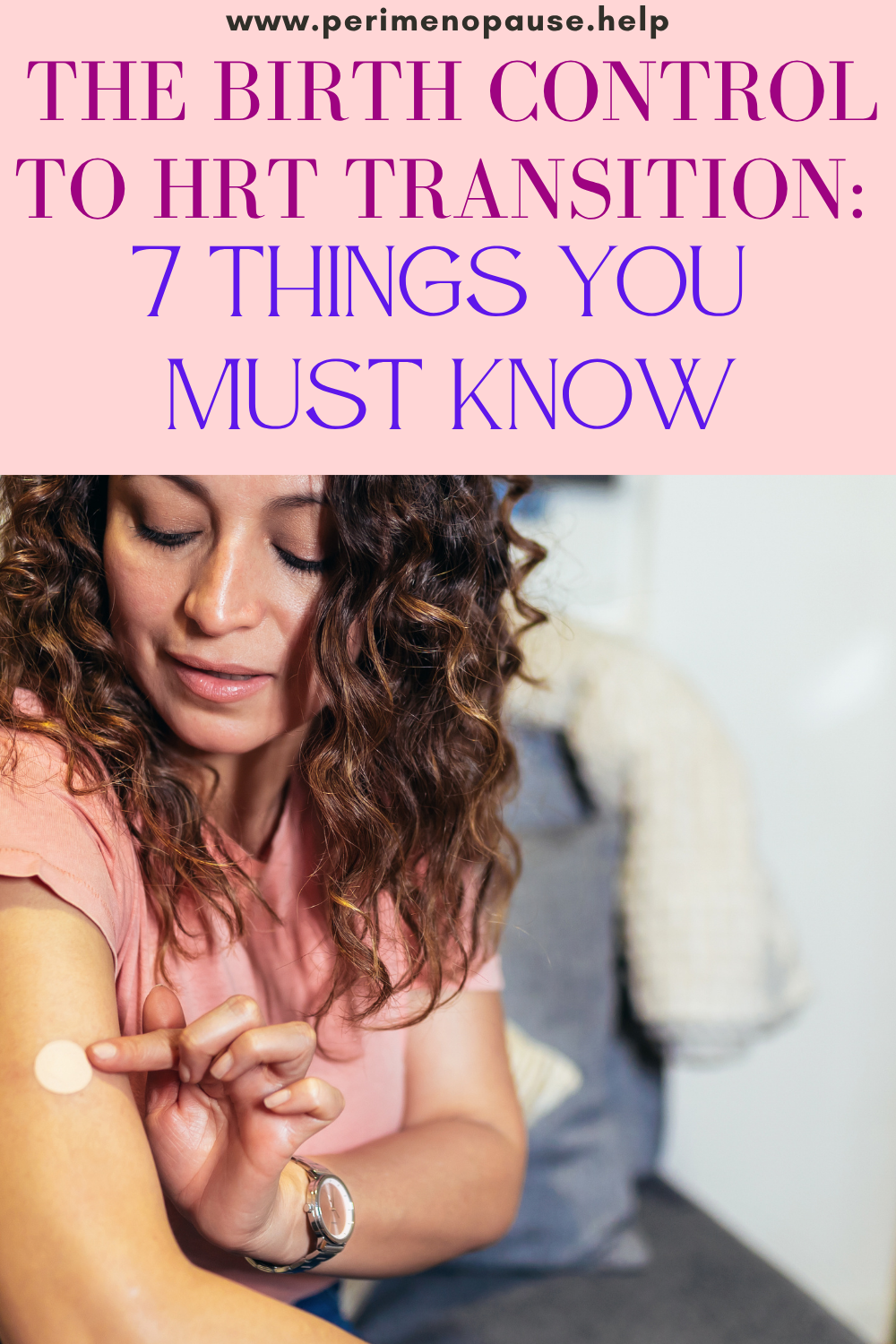
You’re 45, still on the birth control pill you started a decade ago, and suddenly you’re having breakthrough hot flashes, your sleep is wrecked, and your doctor just mentioned hormone replacement therapy.
Now you’re wondering if you should switch.
The problem is that some women think the pill and HRT are just different versions of the same thing. They’re not. One is designed to prevent pregnancy by shutting down your ovaries. The other replaces hormones your body no longer makes consistently.
This confusion leads to serious gaps in care, especially when you’re navigating the messy terrain of perimenopause where you still need contraception, but your body is screaming for symptom relief.
UNDERSTANDING THE FUNDAMENTAL DIFFERENCES: HRT vs Birth Control for Perimenopause
The first thing you need to understand is that birth control and hormone replacement therapy were built for completely different jobs, and treating them like interchangeable options creates real problems during the perimenopause transition.
Why HRT Does Not Prevent Pregnancy
Menopausal hormone therapy replaces some of the estrogen and progesterone your ovaries stop producing consistently during perimenopause. It can dramatically improve hot flashes, night sweats, brain fog, vaginal dryness, and bone health, but also mood, sleep, help with reducing joint pain, and relieve itchy skin- just to name a few benefits. But here’s the critical distinction: standard HRT does not reliably suppress ovulation, which means you can still get pregnant.
This becomes especially dangerous for women who assume switching from the pill to HRT automatically means they no longer need contraception.
Even if your periods have become erratic, even if you’re having classic menopause symptoms like night sweats or even hot flashes, sporadic ovulation can still happen (it’s less likely than earlier in your life but it can still happen). You need a separate contraceptive plan if pregnancy is not something you’re prepared to manage.
HRT doses are different than birth control doses because the goal is symptom management, not ovarian suppression. Estradiol patches, gels, or low-dose oral estradiol combined with progesterone (though I don’t recommend oral estradiol pills for hormone replacement, see my other blog about estrogen patches to learn more) can smooth out the hormonal chaos of perimenopause without the ovarian suppression. This is beneficial because, in perimenopause, our ovaries are often, at least intermittently, suppressed, and further suppression can exacerbate symptoms; however, that consistent suppression is what prevents pregnancy.
Consider this scenario: A 48-year-old woman switches from her combined pill to a low-dose estradiol patch and micronized progesterone for better sleep and hot flash control. She assumes she’s covered. Three months later, she has a positive pregnancy test because she was still ovulating occasionally and had unprotected sex. This is not rare. It’s a planning failure.
The transition from contraception to menopause management needs to include a frank conversation about whether you still need birth control, and if so, what method you’ll use once you stop suppressing your ovaries with the pill.
How Birth Control Suppresses Your Cycle
The combined oral contraceptive pill works by delivering synthetic estrogen and progestin in doses high enough to shut down the signals between your brain and your ovaries. No signal means no ovulation. No ovulation means no pregnancy.
This suppression also makes your periods lighter, more predictable, and sometimes eliminates them entirely depending on how you take the pill. For women dealing with heavy bleeding, severe cramps, or hormonally triggered migraines during early to mid perimenopause, the pill can solve multiple problems at once.
The monthly bleed you experience on the pill is not a real period. It’s a withdrawal bleed caused by the drop in hormones during the placebo week. This is why you can’t use your menstrual pattern on the pill to determine whether you’ve reached menopause. The pill is creating an artificial cycle, masking what your ovaries are actually doing underneath.
Here’s where it gets tricky. Because the pill suppresses your natural hormones, testing FSH or estradiol while you’re taking it gives you almost no useful information. FSH will be low because the pill is designed to keep it low. That doesn’t tell you whether your ovaries are still functional or whether you’ve transitioned into menopause. You’re essentially flying blind.
Some women stay on the pill well into their late forties because it’s managing symptoms effectively and they still need contraception. That can be a reasonable choice for a healthy nonsmoking woman with no contraindications. But it should be a deliberate, reassessed decision, not inertia.
TYPES OF BIRTH CONTROL AND THEIR HORMONE PROFILES
Not all birth control is created equal, and understanding what type of contraception you’re using changes how you think about the transition to menopause management.
Combined Oral Contraceptives
Most combined pills use ethinyl estradiol as the estrogen component, paired with one of several progestins like levonorgestrel, norethindrone, drospirenone, or desogestrel. Oral ethinyl estradiol can affect the liver, clotting factors, and lipid metabolism.
Combined pills come in different doses. Low-dose pills typically contain 20 to 35 micrograms of ethinyl estradiol. Some extended-cycle formulations let you take active pills for 84 days straight, reducing the number of withdrawal bleeds per year.
The challenge during perimenopause is that combined pills can mask declining ovarian function while also carrying slightly higher cardiovascular and clotting risks as you age. The American College of Obstetricians and Gynecologists does not set a strict age cutoff, but most clinicians become more cautious after age 50, especially if you smoke, have migraines with aura, uncontrolled high blood pressure, or a history of blood clots.
A few newer combined pills use estradiol valerate or 17-beta estradiol instead of ethinyl estradiol. These formulations have a different risk profile and may be considered when standard combined pills are not ideal. But they are still contraceptive-strength doses and are not the same as standard menopausal HRT.
Progestin-Only Pills
Progestin-only pills, sometimes called mini-pills, contain no estrogen. Traditional versions use norethindrone and require precise daily timing. Newer formulations use drospirenone or desogestrel and offer a longer window for missed doses.
Progestin-only pills work by thickening cervical mucus, thinning the uterine lining, and sometimes suppressing ovulation, though not as reliably as combined pills. They are often used when estrogen is contraindicated due to migraine with aura, clotting history, or smoking over age 35.
For perimenopausal women, progestin-only pills can provide contraception without adding estrogen-related risks. However, they wil not address low estrogen-dependent symptoms like hot flashes or vaginal dryness. Some women pair a progestin-only method with low-dose transdermal estradiol to get both contraception and symptom relief.
Bleeding patterns on progestin-only pills can be unpredictable, with irregular spotting or absent periods. This can make it harder to know what your natural cycle is doing, similar to the masking effect of combined pills.
Hormonal IUDs
Levonorgestrel-releasing IUDs like Mirena, Kyleena, Liletta, and Skyla release progestin directly into the uterus. This provides highly effective contraception by thickening cervical mucus and thinning the endometrial lining. Systemic hormone absorption is much lower than with pills, though some women still experience mood or skin effects.
One major advantage during perimenopause is that hormonal IUDs often make periods lighter or eliminate them entirely. For women struggling with heavy bleeding as estrogen and progesterone swing wildly, this can be life-changing.
The levonorgestrel IUD can also serve as the progestogen (but the synthetic type of progesterone) component of hormone replacement therapy when combined with systemic estradiol. This approach can provide endometrial protection without needing to take oral progesterone or add a progestin to your HRT regimen. However, in late perimenopause, this may not be enough to help you get past low progesterone symptoms like night sweats, anxiety, and sleep problems.
Duration matters: Mirena is FDA-approved for contraception for seven years but is only studied for endometrial protection with estrogen therapy for five years. If you’re using it as part of an HRT regimen, timing the replacement correctly is critical.
Hormonal IUDs do not suppress ovulation as reliably as combined pills, so FSH testing can sometimes be done while the IUD is in place, though results should still be interpreted cautiously.
Copper IUDs
The copper IUD releases no hormones at all. It works by creating an inflammatory environment in the uterus that is hostile to sperm and prevents implantation. It provides up to ten years of contraception and does not interfere with ovulation or your natural hormone production.
This makes the copper IUD an ideal choice for perimenopausal women who want reliable contraception without any hormonal impact. You can test FSH and estradiol levels freely, start HRT when symptoms warrant it, and maintain contraception independently.
The downside is that copper IUDs can make periods heavier and cramps worse, which can be a dealbreaker for women already struggling with perimenopausal bleeding chaos. But for women with light cycles or those who prioritize hormone-free contraception, it’s a strong option.
Contraceptive Implant
The etonogestrel implant, sold as Nexplanon, is a small rod placed under the skin of your upper arm that releases progestin for up to three years. It works by suppressing ovulation and thickening cervical mucus.
Like progestin-only pills and hormonal IUDs, the implant provides contraception without estrogen. It’s highly effective and requires no daily attention, which appeals to women who struggle with pill adherence.
Bleeding patterns can be all over the map: some women stop having periods entirely, while others experience prolonged irregular spotting. This unpredictability can be frustrating during perimenopause when you’re already dealing with erratic cycles.
Because systemic progestin levels are relatively low, some women pair the implant with transdermal estradiol for symptom management. However, the implant alone will not address hot flashes, night sweats, or vaginal dryness if those symptoms are driven by estrogen deficiency. And, just as above with the progestin based IUD, the synthetic progestin in the implant may not be sufficient to treat low progesterone symptoms in late perimenopause.
Injectable Contraception
Depot medroxyprogesterone acetate, or Depo-Provera, is a progestin (synthetic progesterone) injection given every three months. It suppresses ovulation effectively and often stops periods entirely after the first few doses.
One significant concern with Depo-Provera is its association with decreased bone density, especially with prolonged use. This is particularly relevant for perimenopausal women who are already facing increased bone loss as estrogen declines.
Most guidelines recommend limiting Depo-Provera use or pairing it with calcium, vitamin D, and sometimes estrogen supplementation if bone health is a concern. For women over 45, Depo is typically not the first-choice contraceptive unless there are compelling reasons other methods won’t work.
Like other progestin-only methods, Depo-Provera does not address estrogen-dependent symptoms and may actually worsen them if estrogen levels drop too low without replacement.
PROS AND CONS OF STAYING ON BIRTH CONTROL DURING PERIMENOPAUSE
Deciding whether to continue birth control through perimenopause or transition to HRT depends on what problems you’re trying to solve and what risks apply to your specific situation.
When Birth Control Makes Sense
If you still need reliable contraception and your cycles are unpredictable, heavy, or painful, as they can often be in early perimenopause, staying on the pill or another hormonal contraceptive can solve multiple problems at once. You get pregnancy prevention, cycle regulation, reduced bleeding, and sometimes improvement in hormonally driven symptoms like migraines, acne, or mood swings.
For women who are healthy, nonsmoking, don’t have migraine with aura, have no cardiovascular or clotting risks, and have normal liver function, continuing a low-dose combined pill into the mid to late forties can be a practical choice.
Combined pills can also smooth out some perimenopause symptoms like hot flashes and sleep disruption by maintaining more stable hormone levels than your own erratic ovarian function would provide. This is not the primary reason to use the pill, but it can be a welcomed side effect.
Progestin-only methods like the hormonal IUD or implant are particularly useful for women who need contraception but cannot take estrogen. Pairing one of these with low-dose transdermal estradiol gives you both pregnancy prevention and targeted symptom relief.
When Birth Control Becomes Problematic
The risks associated with combined hormonal contraception increase with age, particularly after 35 if you smoke and after 40 even if you don’t, especially if you have other risk factors. These risks include blood clots, stroke, heart attack, and worsening of certain types of migraines.
Migraine with aura is a hard contraindication to estrogen-containing contraception. The combination significantly raises stroke risk and you must discuss any type of contraception with your provider, as you should in any case.
High blood pressure, a history of blood clots or clotting disorders, a history of stroke or heart disease, active or recent breast cancer, and certain liver conditions also make combined pills inappropriate.
Even if you don’t have absolute contraindications, the calculus changes as you accumulate cardiovascular risk factors. A 47-year-old woman with high cholesterol, prediabetes, and a family history of early heart disease has a different risk profile than a 47-year-old marathon runner with perfect labs.
Another issue is the masking effect: because combined pills suppress your natural hormones, you have no idea what your ovaries are doing. You may have transitioned into menopause years ago but have no way of knowing because the pill is creating an artificial cycle.
This makes it difficult to time the transition to HRT or to determine when you can safely stop using contraception. Many clinicians wait until age 50 to 55, stop the pill (though in my practice we often have this conversation in the mid 40s or earlier depending on symptoms), and reassess symptoms and hormone levels after a few months. If menopausal symptoms emerge, HRT can be started. If you feel fine, no treatment may be needed.
THE BLOOD TEST DILEMMA
One of the most frustrating aspects of being on birth control during perimenopause is that it makes hormone testing nearly useless.
Why FSH and Estradiol Testing Fails on the Pill
The combined oral contraceptive pill suppresses the pituitary hormones FSH and LH, which normally rise as your ovaries start to fail. A low FSH on the pill does not mean your ovaries are still working well. It means the pill is doing its job of shutting down the signal between your brain and your ovaries.
Estradiol levels on the pill are also artificially influenced by the synthetic estrogen in the pill. You’re not measuring your natural estrogen production. You’re measuring the effect of the medication.
Some doctors will tell you to stop the pill for a few weeks and then test FSH. This can give you a snapshot of where your ovaries are, but it’s not foolproof. FSH can fluctuate wildly during perimenopause, and one normal or low result does not mean you’re not transitioning into menopause.
Stopping the pill temporarily also raises the possibility of pregnancy if you’re sexually active and not using backup contraception during the testing window. This creates a catch-22 where the very process of trying to figure out if you need HRT puts you at risk for an unintended pregnancy.
What About Testing on Progestin-Only Methods?
Progestin-only pills, hormonal IUDs, the implant, and Depo-Provera do not suppress ovulation as reliably as combined pills, and they do not contain estrogen. This means FSH and estradiol testing is theoretically possible, though still not perfectly reliable.
FSH may rise appropriately as menopause approaches even if you have a hormonal IUD or implant in place. However, the progestin can still affect cycle regularity and bleeding patterns, making it hard to interpret results in the context of your symptoms.
The copper IUD is the only contraceptive method that allows completely unaffected hormone testing because it releases no hormones at all. If knowing your hormone levels is important to you, the copper IUD paired with symptom-driven HRT is the cleanest approach.
WHEN AND HOW TO TRANSITION FROM BIRTH CONTROL TO HRT
The transition from contraception to menopause management should be a planned, individualized process, not something that just happens because you hit a certain birthday or because you started having certain symptoms. Always work with a hormone trained provider and discuss your unique situation with them.
Assessing Whether You Still Need Contraception
Fertility declines significantly in your forties, but it does not disappear. Pregnancy at 45 is uncommon but not impossible, especially if you’re still having regular or semi-regular periods.
The general guideline is that you need contraception until you’ve gone 12 consecutive months without a period if you’re over 50, or 24 consecutive months if you’re under 50. These timelines assume you’re not on any hormones that are masking your natural cycle. This can vary, of course, whic highlights the importance of testing and working with a provider.
If you’re on the pill, you have no way of knowing when you’ve hit those milestones because the pill is controlling your bleeding.
One approach is to stop the pill around age 50 to 52 and see what happens. If periods stop and don’t return for 12 months, you’ve likely reached menopause and no longer need contraception. If they resume or symptoms become intolerable, you can start HRT.
Another approach is to switch to a non-hormonal method like the copper IUD or condoms while continuing to use HRT for symptoms, then stop contraception once the appropriate amenorrhea window has passed.
Timing the Switch Based on Symptoms
If your primary issue is heavy, unpredictable periods and you still need contraception, staying on the pill or switching to a hormonal IUD may be the better short-term solution. Once bleeding becomes less of an issue and contraception is no longer needed, transitioning to HRT for hot flashes, sleep, mood, or bone health makes more sense.
If your biggest problems are severe hot flashes, night sweats, vaginal dryness, or painful sex, and contraception can be handled separately, moving to HRT sooner rather than later can dramatically improve quality of life.
There is no benefit to suffering through months of untreated symptoms just to prove you’re menopausal. If you stop the pill at 50, immediately start having disruptive hot flashes, and meet the criteria for HRT, you can start treatment without waiting for arbitrary hormone levels to confirm what your symptoms are already telling you.
The key is coordination. If you’re stopping a combined pill and starting HRT, you need a plan for contraception during the overlap period if pregnancy is still a concern. This might mean using condoms, placing a copper IUD, or timing the transition around your last expected ovulation.
Health Risk Reassessment
Before continuing birth control into your late forties or transitioning to HRT, your doctor should reassess your cardiovascular risk factors, clotting history, migraine status, blood pressure, breast health, liver function, and smoking status.
A medication that was safe and appropriate at 38 may no longer be the best choice at 48.
If you have migraine with aura, uncontrolled hypertension, a history of stroke or blood clots, active breast cancer, or multiple cardiovascular risk factors, combined hormonal contraception should be stopped and alternative methods explored.
Transdermal estradiol used in HRT has a different risk profile than oral ethinyl estradiol in birth control pills, particularly regarding clotting risk. A woman who cannot safely take the pill may still be a candidate for low-dose HRT, but that decision requires careful individualized assessment.
What Not to Do During the Transition
Do not layer standard-dose systemic HRT on top of a combined birth control pill. This creates unnecessary hormone exposure and is not how these therapies are designed to be used. If you’re going to use HRT, stop the pill first or switch to a progestin-only method that can be coordinated with estradiol therapy.
Do not assume HRT provides contraception. It does not. Even low-dose estradiol and progesterone used for menopause symptom management will not reliably prevent pregnancy if you’re still ovulating occasionally.
Do not chase hormone levels while actively taking a combined pill. The medication is suppressing the very hormones you’re trying to measure, making the results meaningless. If testing is important, it needs to happen after stopping the pill or while using a method that doesn’t interfere with your natural hormone production.
Coordinated Transition Strategies
One practical approach that could be beneficial, after talking with your provider, is switching from a combined pill to a levonorgestrel IUD for endometrial protection, then adding transdermal estradiol gel or a patch for hot flashes and other symptoms. This gives you contraception, symptom relief, and uterine protection in a coordinated package.
Another option is stopping the pill (again after talking to your provider), starting a copper IUD for contraception, and beginning HRT based on symptoms. This keeps contraception and hormone therapy completely separate, giving you maximum flexibility to adjust doses and formulations.
Some women stop the pill around age 50, use barrier methods temporarily, and start HRT if symptoms warrant it.
Once 12 months have passed without a period, contraception can be discontinued.
The exact strategy depends on what your body is doing, what symptoms you’re experiencing, and what your individual health risks look like. There is no one-size-fits-all protocol, which is why this transition requires ongoing conversation with a clinician who understands both contraception and menopause management.
The worst outcome is staying on the same pill you’ve been taking for 15 years without ever reassessing whether it’s still the right tool for the job, or stopping it abruptly with no plan for managing symptoms or preventing pregnancy. The transition through perimenopause is not something that just happens to you. It’s something you can actively manage with the right information and the right clinical partnership.
Choosing between birth control and HRT is not about picking the stronger medication or the one with fewer hormones. It’s about matching the tool to the job. If you need contraception, cycle control, and ovarian suppression, birth control is often the right answer. If you need targeted symptom management for menopause with flexible, individualized dosing, HRT is usually the better fit.
Understanding the difference means you can make decisions based on what your body actually needs instead of what’s convenient, familiar, or assumed. And that clarity makes all the difference when you’re navigating the messy, confusing years between full fertility and full menopause.

Dr. Shelley Meyer is a board-certified family physician and Institute of Functional Medicine-certified functional medicine physician, as well as a Registered Dietitian. She is passionate about helping women navigate the roller coaster of perimenopause and postmenopause. She has her own Functional Medicine Practice in Denver, Colorado.






Leave a Reply
You must be logged in to post a comment.