

Is the Hume Health Body Pod accurate? See expert and user Hume Health Body pod reviews, compare it to InBody, and learn how this smart scale tracks real body composition changes.
Key Takeaways
- The Hume Body Pod offers advanced body composition analysis with an accuracy of 98%, a close correlate with DEXA scan results.
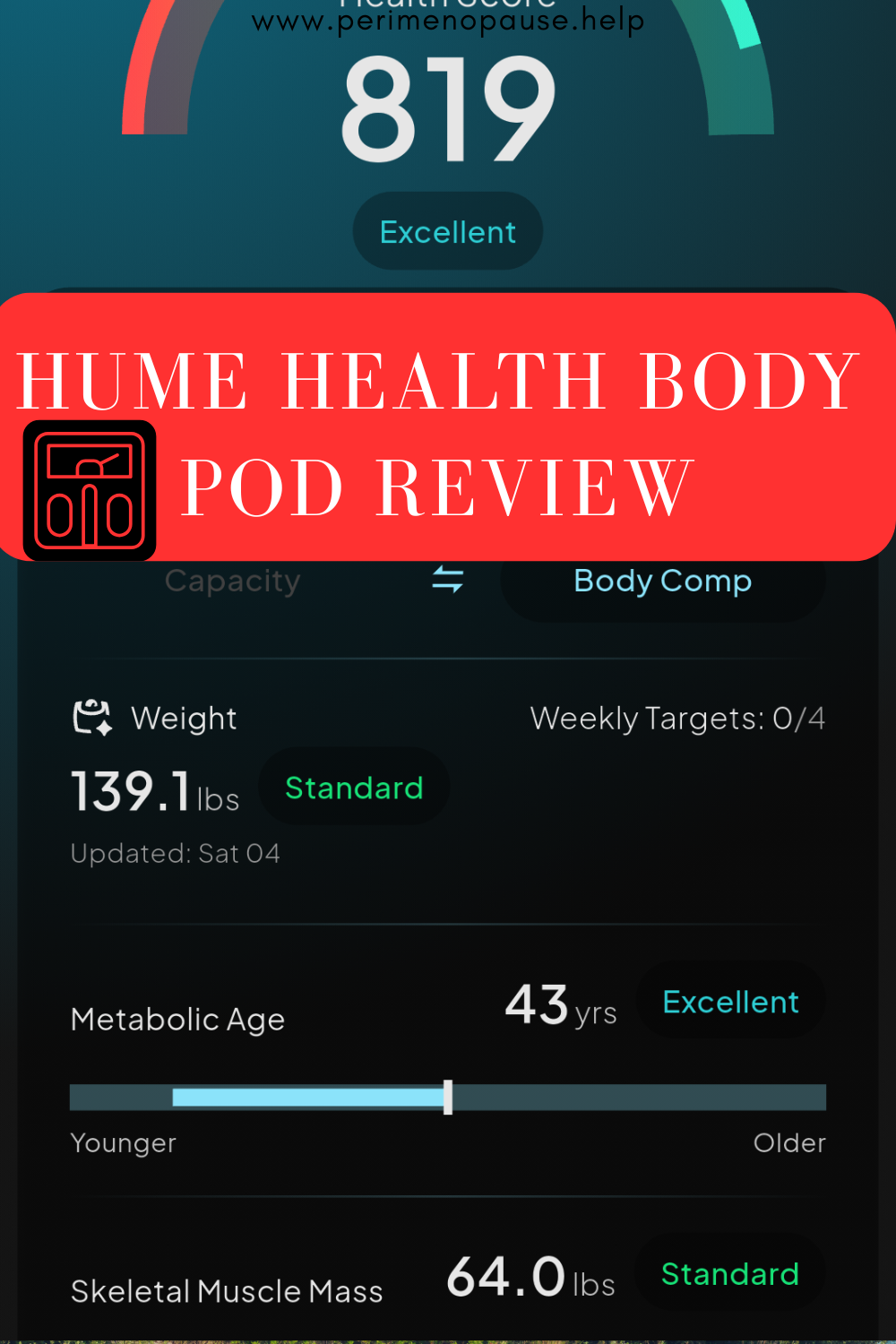
- It features an accompanying app that provides personalized health insights and reports, including data on metabolic age, skeletal muscle mass body fat percentage, visceral fat, skeletal mass, BMR, body water percentage, resting heart rate, body cell mass, and bone mineral content.
- The device is approved for use in medical clinics, though it might not be quite as accurate as some other (much more expensive) machines like InBody (but I have compared them and they are pretty darn close).
- Users report positive experiences, with many finding it a dependable tracker for tracking body composition changes over time.
- The Hume Body Pod comes with a standard 1-year warranty, with an option for a 10-year warranty
Overview of the Hume Health Body Pod
In the quest for better health metrics and body composition measurements, which we often discuss on this blog, many women in perimenopause and menopause are turning to advanced tech and trackers. The Hume Health Body Pod has become a popular choice for those looking to track their body composition changes with greater precision than traditional scales offer (and to look at many more metrics- the number on a traditional scale does not give you nearly enough info).
Let’s dive into what makes this smart scale stand out and whether it might be the right investment for your wellness journey.
What is the Hume Body Pod?
The Hume Body Pod is an advanced body composition analyzer that goes beyond what a regular scale can tell you. Using multi-frequency bioelectrical impedance analysis technology, it sends a safe, low-level electrical current through your body when you stand on it with bare feet and hold the handheld sensors.
This technology enables the device to measure not only weight but also body fat, muscle mass, bone density, visceral fat, and over 40 other vital health metrics helpful for women navigating hormonal changes. The Hume Pod is designed with clinical-grade accuracy, making it a helpful tool for tracking changes during perimenopause and menopause.
Body Pod Key Features and Performance
-
The Hume Body Pod uses eight-frequency bioelectrical impedance sensors (four footplates and handheld electrodes) to measure over 40 body composition metrics including fat, muscle, bone, and visceral fat.
-
Hume reports the device to be about 98% accurate when compared to DEXA scans, based on internal company testing, not peer-reviewed external studies.
-
At this time, no published third-party research verifies the 98% accuracy figure or the “within 1–2% of DEXA” correlation often mentioned in reviews (though I have compared within my clinic and found it to be as accurate as the InBody machine- over time- and the InBody has several third-party studies).
-
Reviewers who have compared Hume results to clinical scans generally find the trends to be consistent when measurements are taken under the same conditions (same time of day, hydration status, etc.).
-
The Body Pod is approved for use in medical clinics, suggesting a higher calibration standard than typical consumer-grade smart scales, though this approval doesn’t necessarily equal independent validation.
-
For most users, the greatest benefit lies in tracking trends over time rather than expecting the exact same numbers as a DEXA scan.
The Hume Health Body Pod is priced at $499(but they frequently run sales, and you can often purchase it for $299-$329). While this is certainly an investment, many users find the body composition statistics worth the cost when compared to less expensive and less accurate alternatives, particularly regular scales
The Hume Health Body Pod Scale can be purchased directly on their site or on sites like Amazon (in fact, this link shows it for $229).

- #1 Body Analyzer Used In Clinics - Reach health goals 12x faster with powerful data. As the only scale approved for medical clinics, The Body Pod uses 8 frequency sensors to deliver precise weight, full body composition, and heart health.
- Industry leading Accuracy and Precision - The Body Pod is like having a GPS that allows you to easily lose the right weight with industry-leading 98% accuracy. Track over 45+ key health metrics including weight, body fat, muscle mass, BMI, and bone mass.
- AI-Powered Coaching & Feedback - Take the guesswork out of your fitness journey with personalized insights, actionable feedback, and weekly health reports. Leverage artificial intelligence to help you develop health programs unique to your body and goals.
- Family Friendly & HSA/FSA Eligible - Easily add up to 30 unique users, making the Body Pod ideal for tracking your fitness goals with family, friends, or a workout group. Plus, it's HSA/FSA eligible to keep your family focused on health, not the wallet.
- Easy To Use - Leverage our free Hume Health app by syncing our Body Pod with your device quickly and easily via Bluetooth technology. Need more guidance on your fitness journey? Upgrade to our paid, premium app for the ultimate home health experience.
Body Pod Accuracy and Performance
Comparison with DEXA Scans
When it comes to measuring body composition, DEXA scans are widely considered the gold standard. The Hume Health Body Pod claims to correlate within 3% of DEXA scan results, but again this is internal testing.
In real-world testing, users have reported consistent results when comparing their Hume Pod measurements with professional DEXA scans. One reviewer tracked her progress over six months with both methods and found the Hume Body Pod to be reliably accurate for monitoring changes in body fat and muscle mass.
Hume Body Pod vs InBody
The InBody H30, another premium smart scale, is often compared to the Hume Body Pod. Both devices use similar technology but with some key differences:
- The InBody H30 shows a 98% correlation with DEXA scans, similar to the Hume Pod
- The Hume Body Pod measures slightly more health metrics overall
- InBody’s price point is typically lower at around $299
- Both offer integration with fitness apps, though the Hume Health app provides more actionable recommendations
- When comparing my Hume Body Pod to the InBody 570 (the type I had used for years in my office) it measured the same as the InBody. This comes with a caveat: it took some time, about 1-2 weeks of regular use, for the Body Pod to become accurate. It seems as if it needs a “get to know you” time period, similar to other tools (I’ve discussed this with the Lumen metabolic tracker, too).
Other Body Composition Monitors for Home Use
Other Accurate Home Body Composition Devices
-
Tanita RD-545 – Dual-frequency BIA with proven consistency in independent studies; provides segmental muscle and fat analysis; costs about $450–$500.
-
Withings Body Comp – Multi-frequency BIA with vascular age and nerve health scoring; highly reliable for home use but not quite as accurate as the Body Pod; around $199.
-
Evolt 360 – Professional-grade analyzer with advanced metrics like phase angle and bio age; ~98% DEXA correlation from internal testing; typically $2,000+, so not affordable for most people.
-
Renpho Elite Smart Scale – Budget option with single-frequency BIA; less precise (~90–92% vs DEXA) but useful for general trend tracking; about $99.
Hume Health Body Pod Reviews
Many women in perimenopause and menopause have found the Hume Body Pod (and other body composition monitors) to be a game changer for understanding their changing bodies. Users, including myself and my clients/patients particularly appreciate the ability to track metrics beyond weight at home and regularly, such as metabolic age, visceral fat, and skeletal muscle mass.
One patient of mine shared: “As I entered perimenopause, I noticed my body responding differently to my usual exercise routine. The Body Pod helped me see that while my weight stayed the same, my body composition was changing—I was losing muscle and gaining fat. I was then able to focus more on strength training and less on endurance types and running, this allowed me to make actionable, targeted changes.”
I’ve found the Body Pod to be accurate and helpful in my body composition journey. Throughout both perimenopause and menopause, I have gained an average of 7-10 pounds, and in certain years, more. I have struggled to get this weight off, often needing to vary up my daily workouts and make them more strength-training focused. I also have to frequently change them up, and I switched from running to walking intervals. It’s still a struggle, but I’ve noticed a positive change in my Body Pod metrics.
While most users find the Hume Body Pod highly consistent, there are drawbacks worth noting. Many reviewers note that the scale’s $499 price tag seems steep compared to other home body composition devices offering similar functionality for less. But, again, sales and discounts happen often.
Some users also express frustration that Hume’s accuracy claims (98% correlation with DEXA scans) are based on internal data rather than independent, peer-reviewed studies, leaving some uncertainty about true clinical precision.
Others point out that readings can vary depending on hydration levels, time of day, or recent exercise, meaning consistent testing conditions are key to getting reliable results. But to be fair, this is true of all body composition BIA type analyzers, and is also the case with my clinical grade InBody 570.
The Hume Health app receives mostly positive feedback, but a few users report that advanced metrics and personalized insights require a paid monthly subscription, which can feel restrictive and, frankly, frustrating after purchasing such an expensive device. See other tech notes below!
Lastly, a small number of reviewers note a learning curve with setup and positioning, especially when switching between multiple household users. I haven’t attempted to switch between users, but as noted above, I did find it required a time period to get to know me.
Hume Health App and Additional Features
Overview of the Hume Body Pod App
The Hume Health app is a key component of the Body Pod experience, changing the raw data into actionable guidance.
Hume App Subscription — Paid vs Free
-
The free version of the Hume Health app provides core metrics (weight, body fat, muscle mass, etc.) and trend graphs.
-
The premium subscription ($9.99/month or discounted annually) adds enhanced analytics such as:
-
Trend tracking and goal setting with more detailed historical data
-
Personalized insights on muscle, fat, and metabolic rate changes
-
Nutritional and lifestyle recommendations generated by Hume’s internal algorithm
-
Priority customer support and early access to new features
-
-
While the app’s marketing language references “hormonal insights” and “coaching support,” these are AI-based data interpretations, not individualized consultations with live health coaches.
-
There’s no verified evidence that the premium plan provides human health coaching or hormone-specific analysis tailored to women in perimenopause.
-
Users generally find the data visualization and long-term tracking tools helpful, but note that the personalized recommendations are somewhat generic.
I personally do use the premium subscription and have found it worth it- but I haven’t used the free version and only learned about it while writing this blog.
Warranty and Support
Warranty Details
The Hume Health Body Pod comes with a standard 1-year warranty, with an optional 10-year warranty available for purchase. Some find the peace of mind of the extended warranty but some don’t. Heres’ more info:
[https://humehealth.com/pages/hume-body-pod?srsltid=AfmBOoqWZBZqpifblp6FL9vKGz82cJkVDCKPP8vsLP4Et37X_hAzxQop].
Additionally, the company offers a 30-day money-back guarantee, allowing you to try the device and return it for a full refund if you’re not satisfied with its performance.
Customer Support and Resources
Hume Health provides several support channels for Body Pod users:
- Email and chat support through their official website
- A comprehensive knowledge base with troubleshooting guides
- Video tutorials for getting the most accurate readings
- Regular firmware updates to improve functionality
- Community forums where users can share experiences
Users generally report positive experiences with customer service, noting responsive support and helpful guidance for maximizing the benefits of their device. I did personally receive excellent support when the first device I ordered failed to connect via Bluetooth.
Conclusion
The Hume Health Body Pod represents a significant help, in my opinion, in home body composition measurement, and I have found it to be accurate when compared to the InBody 570.
At $499 full price and even mid to upper $200s when on sale, it’s certainly an investment, but one that many users find worthwhile for the detailed insights it provides beyond what a standard scale can offer.
When compared to the InBody H30, the Hume Body Pod offers more comprehensive metrics and slightly better integration with its app, though at a higher price point. Both devices offer significant improvements over traditional scales for those serious about understanding their body composition changes. Additionally, the other devices listed above can be useful tools.
For women in perimenopause and menopause who are committed to maintaining or improving their body composition, the Hume Health Body Pod can provide the actionable recommendations and measurements needed to make informed decisions about diet, exercise, and overall wellness strategies. It’s not just about weight—it’s about understanding the complex changes happening in your body when your hormones shift- and taking control of your health goals with accurate information.
You may also like:
How to Boost Menopause Metabolism: Adapt, Don’t Settle
Metabolism in Menopause: How the Lumen Device Can Help!
Do Bioidentical Hormones Help with Weight Loss? (Doctor’s Guide)

Dr. Shelley Meyer is a board-certified family physician and Institute of Functional Medicine-certified functional medicine physician, as well as a Registered Dietitian. She is passionate about helping women navigate the roller coaster of perimenopause and postmenopause. She has her own Functional Medicine Practice in Denver, Colorado.








Leave a Reply
You must be logged in to post a comment.