

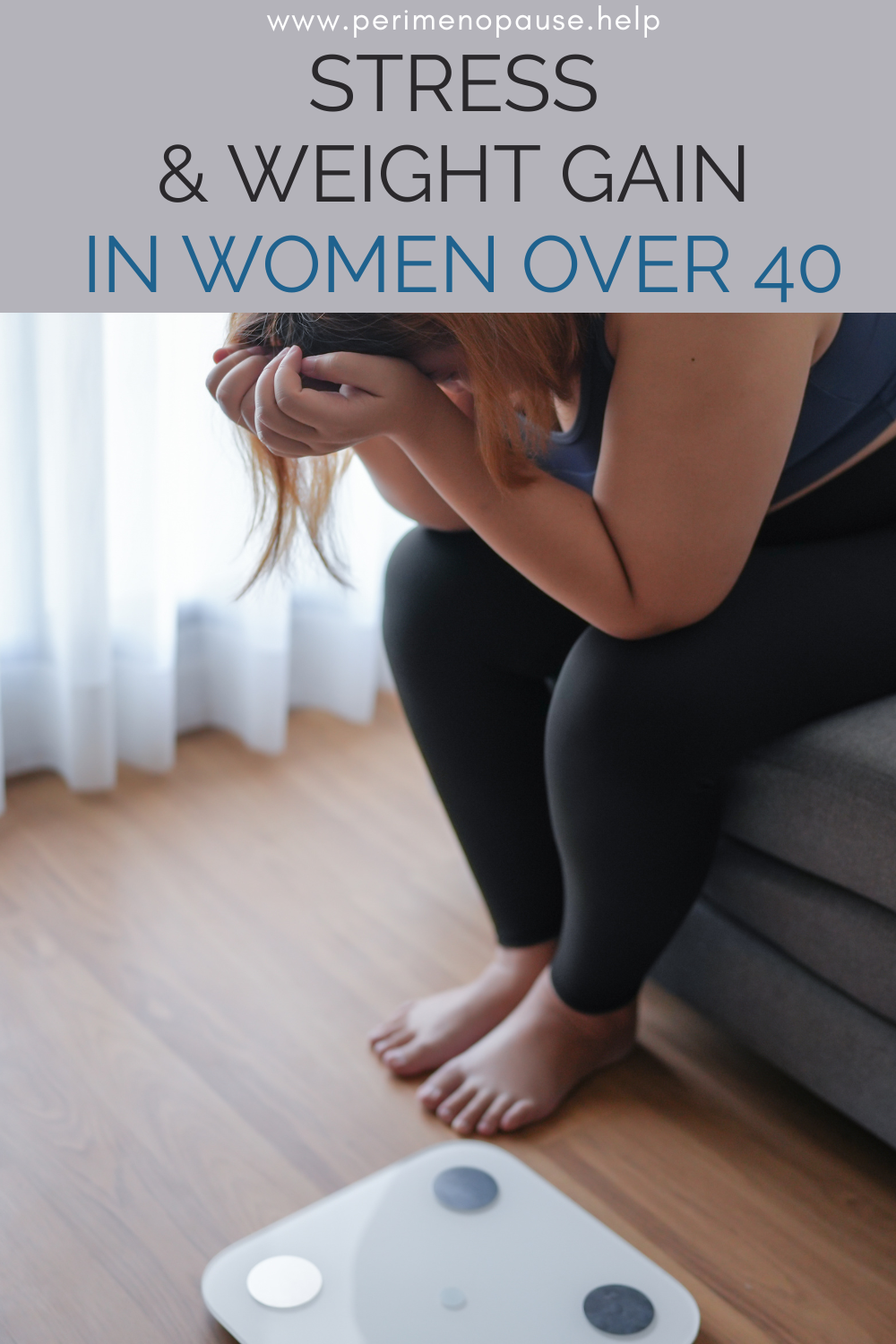
Wondering if stress and weight gain are connected in women over 40? Yes, they definitely are- let’s explore why and what you can do about it!
Understanding Stress and Its Effects on Women Over 40
Let’s face it—as a woman entering your 40s, you can suddenly feel like your body has changed the rules without warning. That stubborn belly fat that wasn’t there before? It often has far more to do with your relentless schedule, emotional load, and hormonal shifts than with that occasional chocolate, or gasp, piece of bread!
Chronic stress has become an unwelcome companion for so many women over 40—juggling work, changing hormones, and a never-ending to-do list- and that in itself can be overwhelming but add to that the stressors of marriage or relationships, kids, and/or aging parents and it’s A LOT.
And after 40, the relationship between stress and weight gain becomes even more noticeable as estrogen and progesterone start to fluctuate and decline, sometimes drastically oppose each other, and decline.
How Cortisol Works and Why It Changes in Women After 40
When you encounter stress, your body flips on its ancient fight-or-flight response. Your adrenal glands release cortisol, your primary stress hormone, designed to help you react quickly in the face of danger. Cortisol raises blood sugar to provide fast fuel, sharpens focus, and diverts energy away from non-essential functions like digestion, reproduction, and long-term repair.
This was a brilliant survival system when stress meant running from a predator or responding to an immediate physical threat. The stress would pass, cortisol would fall, and the body would return to balance.
But modern stress doesn’t work that way.
Today, our stressors rarely turn off. Instead of short bursts of danger, we live in a constant state of low-grade alert — as if we’re being chased by a tiger all day, every day. Emails, deadlines, caregiving responsibilities, poor sleep, emotional load, and hormonal shifts keep cortisol switched on far longer than it was ever meant to be.
Everyday chronic stressors for women over 40 include:
-
Work deadlines and professional pressure
-
Family responsibilities and caregiving
-
Emotional and mental stress
-
Sleep deprivation
-
Perimenopause symptoms like night sweats, anxiety, and mood changes
When this stress response stays activated, cortisol remains elevated, and that’s where problems begin — especially with weight.
After 40, your body becomes more sensitive to cortisol’s effects because estrogen and progesterone are no longer providing the same protective buffer. In earlier years, these hormones helped modulate stress, stabilize blood sugar, and support muscle mass. As they fluctuate and decline during perimenopause, cortisol has a stronger influence on metabolism.
Chronically elevated cortisol tells your body that survival is the priority. Cortisol activation (chronically) can create a “cortisol steal” pathway where it can push more cortisol out and take precursors away from your progesterone, further depleting one of your calming, feel-good hormones.
Fat loss becomes stifled, muscle is broken down for quick energy, insulin resistance increases, and fat is preferentially stored — particularly around the abdomen. This is why so many women notice that belly weight appears despite eating well and exercising, and why “just trying harder” often backfires.
In other words, your body isn’t failing you — it’s responding exactly as it was designed to under chronic stress. The challenge after 40 is learning how to calm the stress response so your metabolism can feel safe enough to release weight again.
The Role of Cortisol in Midlife Weight Gain and Belly Fat
Cortisol plays a major role in weight regulation, and when it’s chronically elevated, it affects metabolism in several key ways:
-
It increases blood glucose for quick energy
-
It stimulates fat and carbohydrate breakdown
-
It triggers insulin release and contributes to insulin resistance
-
It signals the body to store fat—especially abdominal fat
A large Finnish study found that higher cortisol levels were directly associated with increased waist circumference and body weight. And this effect becomes even stronger in women after 40 because of unpredictable estrogen spikes and dips and declining progesterone.
In other words: stress isn’t just “in your head”—it’s also in your metabolism.
How Chronic Stress Disrupts Hormones in Perimenopause
During perimenopause, hormone fluctuations already make your system more sensitive. When you add chronic stress and cortisol stimulation on top of those changes, you create a perfect storm for weight gain.
Here’s what happens in perimenopause and even into menopause:
-
Estrogen decline increases fat storage around the abdomen
-
Progesterone decline removes its natural calming effect on the brain and nervous system
-
Cortisol rises more easily and stays elevated longer
-
Insulin becomes less efficient, increasing cravings and blood sugar swings
-
Your thyroid may slow down slightly as a response to chronic stress
This combination leads many women to say, “I’m doing what I’ve always done, but now I keep gaining weight.”
And they’re right—the metabolic rules truly have changed. And no one gives us a new rule book, we are just expected to accept it as “normal aging”.
How Stress Influences Belly Fat Accumulation in Women over 40
Why does stress seem to target the midsection? The abdomen contains more cortisol receptors than other parts of the body. When cortisol remains high, those receptors actively encourage visceral fat storage.
Visceral fat (deep abdominal fat):
-
Releases inflammatory chemicals
-
Increases insulin resistance and diabetes risk
-
Raises cardiovascular risk
-
Interferes with hormone signaling
So stressed bodies aren’t just gaining weight—they’re gaining the kind of weight that is metabolically active and health-impacting. And the kind that can lead to chronic disease, particularly if you are already at increased genetic risk due to family history of heart disease and diabetes.
To learn more about the Symptoms of Perimenopause check out this Ultimate Guide to Perimenopause Symptoms.
Why Some Women Gain Weight Under Stress and Others Don’t
You’ve probably noticed that while some women stress-eat, others lose their appetite completely. These responses reflect differences in nervous system wiring, genetics, past trauma, and hormone patterns.
Research shows that about 40% of people eat more under stress, while others eat less. Cortisol tends to drive cravings for high-fat, high-carb comfort foods—but women in midlife are especially susceptible because estrogen decline amplifies reward-seeking behavior during stress.
Another factor is the oh-so common insomnia and interrupted sleep we as women experience when our estrogen and progesterone shift. When we are sleep deprived, we tend to crave quick energy- often in the form of sugar, or quick carbs like breads, pasta, rice, or processed foods that are easy but not nutrient-dense.
So if stress makes you reach for chips, chocolate, or wine—you’re not imagining it, and you’re not lacking willpower.
Your physiology is literally guiding those cravings.
The Evolutionary Perspective on Stress-Induced Eating
Our bodies evolved in a world where stress usually meant danger or scarcity. When food was uncertain, storing energy quickly was essential for survival.
That’s why stress triggers cravings for calorie-dense foods—it was once a life-saving adaptation. But today, those same instincts show up during:
-
A tough workday
-
Arguing with a teenager
-
A poor night’s sleep
-
Perimenopause irritability or mood triggers
Your biology is trying to protect you, even if the threat is no longer physical or life-threatening. Knowing this can often bring comfort and help guide us down a path of setting boundaries, resetting and prioritizing our self-care, and learning the importance of sleep, healthy relationships, and self-discovery.
Practical Strategies for Lowering Cortisol and Managing Stress
To break the cycle of stress-related weight gain, you need to address both the stress response and the metabolic changes it creates. Evidence-based strategies include:
-
Prioritizing 7–9 hours of restorative sleep. Try to have a restorative night time routine like stretching or yoga, dim the lights, put on amber glasses, read an actual book, turn off the devices, and try to go to bed around the same time every night.
-
Incorporating exercise you enjoy (not what you “should” do). If you enjoy it you will come back to it, and just enjoying it leads to less stress on top of the inherent stress reductiont that exercise can bring.
-
Practicing mindfulness, deep breathing, or meditation for 5–10 minutes a day
-
Building a support network—social connection lowers cortisol. Make sure to surround yourself with people who light you up in a good way, and don’t drain you. Let go of toxic relationships.
-
Using adaptogens like ashwagandha, rhodiola, or holy basil (check with your provider first). Adaptogens like these can significantly help your mood, sleep, and even your weight if the weight gain is stress driven. I like blends like HPA Adapt, Cortisol Calm, Hormone Harmony, and FemGuard balance. But check out my complete supplement reviews and posts to learn more!
Stress management isn’t indulgent—it’s foundational metabolic care. And it’s essential, it should be just as important as taking care of your work projects, family, and definitely more important and better for you than scrolling social media or escaping into Netflix. Those things have their place, but only after you start deeply caring and prioritizing self-care.
Mindfulness and Nervous System Regulation for Weight Management
Mindfulness directly counteracts the stress response by activating the parasympathetic (“rest and digest”) system. When this system is activated:
-
Cortisol drops
-
Cravings decrease
-
Emotional eating becomes easier to interrupt
-
Digestion improves
Mindful eating—simply slowing down and being present with your food—helps retrain your brain’s reward pathways and naturally reduces overeating.
In addition, mindfulness tools like meditation, deep breathing, restorative yoga, journaling, and time in nature are excellent ways to reduce and reset your stress response. And they should be a part of your daily routine, start with a few minutes and work your way up. A litte bit can make a huge differentce in your stress levels.
Nutrition Strategies That Support Cortisol Balance and Weight Loss
Your diet can either support cortisol regulation or keep it elevated. Nutritional strategies that help include:
-
Protein at every meal to stabilize blood sugar and maintain muscle- and eat your protein and veggies first, save the carbs for later in the meal.
-
Complex carbohydrates (sweet potatoes, quinoa, oats) for steady energy- swap these for processed carbs, sugars, and carbs made from white flours.
-
Omega-3 fats (salmon, walnuts, flaxseed or supplements) to reduce inflammation
-
Magnesium-rich foods to support stress resilience
-
Limiting alcohol and caffeine, which can spike cortisol
-
Avoiding extreme calorie restriction, which increases cortisol levels
Gentle, consistent nutrition habits are far more effective than restrictive diets—especially during midlife. To learn more dive into my Lifestyle and Nutrition in Perimenopause page!
Exercise as a Stress Reliever and Weight Management Tool
Movement lowers cortisol, boosts mood, and supports insulin sensitivity. But the type and amount of exercise matters.
Women over 40 often thrive with a mix of:
-
Moderate cardio
-
Flexibility/mobility work like yoga or Pilates
High-intensity exercise every day can backfire and raise cortisol. Listen to your body—exercise should energize you, not drain you. So, try not to go back to your crazy HIIT days (or keep it lower impact), long extended runs, super challenging CrossFit, or anything that feels too draining.
Conclusion: You Can Improve Midlife Weight Gain by Supporting Cortisol Balance
The connection between stress, cortisol, and weight gain in women over 40 is complex—but it is absolutely manageable. Once you understand how your body responds to stress, you can use targeted lifestyle, nutrition, and movement strategies to interrupt the cycle.
And this isn’t just about fitting into your jeans. It’s about supporting your metabolic health, lowering inflammation, easing perimenopause symptoms, and protecting your long-term well-being.
When you support cortisol balance, you support your whole body.
And midlife becomes a lot less of a battle and a lot more of a transformation. It becomes a time of self-care, self-expression, and boosting self-confidence!

Dr. Shelley Meyer is a board-certified family physician and Institute of Functional Medicine-certified functional medicine physician, as well as a Registered Dietitian. She is passionate about helping women navigate the roller coaster of perimenopause and postmenopause. She has her own Functional Medicine Practice in Denver, Colorado.







Leave a Reply
You must be logged in to post a comment.