
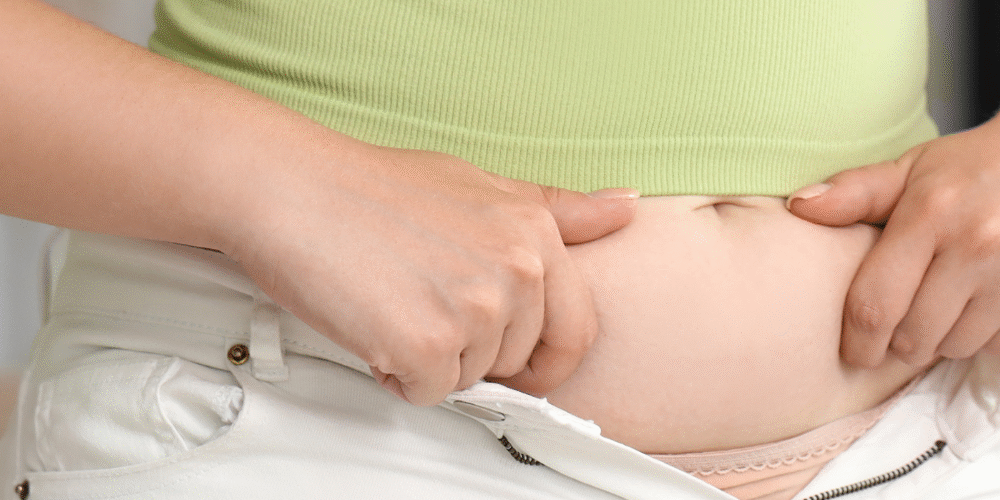
Wondering why the scale is going up and up and nothing is working? Metabolism shifts with hormone changes- check out why, and what you can do about it!
Perimenopause Weight Gain: Why It Happens—and What Actually Helps
Perimenopause weight gain is real, common, and not necessarily indicative of you eating too much or exercising too little. This change in metabolism is more complex, so let’s dive into what is happening, and what you can do about it!
This blog is all about perimenopause weight gain.
Key Takeaways
-
Perimenopause commonly begins in the early 40s, sometimes laste 30s, and brings hormonal shifts that affect metabolism, fat storage, and muscle mass.
-
Nearly 60% of women experience weight gain during perimenopause, often concentrated around the abdomen. Average weight gain is 7-10 pounds.
-
Traditional weight-loss advice—cutting calories and exercising harder—often backfires by increasing cortisol and slowing metabolism.
-
Nutrition strategies focused on protein, fiber, healthy fats, and blood sugar balance better support hormonal health.
-
Strength training and muscle preservation are essential for managing weight and metabolic health during this transition.
What Perimenopause Is and When It Typically Begins
Perimenopause is the transitional phase leading up to menopause and typically begins in a woman’s early to mid-40s, though it can start as early as the late 30s. This phase can last 7 to 10 years before the final menstrual period occurs.
During perimenopause, estrogen and progesterone levels no longer follow predictable monthly patterns. Instead, especially early on, estrogen fluctuates—sometimes dramatically. Progesterone starts to gradually decline. These hormonal shifts can lead to symptoms such as irregular periods, hot flashes, night sweats, mood changes, disrupted sleep, and changes in body composition- among many other less commonly noted symptoms. See this blog to learn more: https://www.perimenopause.help/symptoms-and-conditions/
Importantly, perimenopause is not a sudden event. It’s a gradual physiological transition, and weight gain is often one of the earliest and most frustrating signs.
How Hormonal Shifts in Perimenopause Drive Weight Gain
Estrogen’s role in Perimenopause Weight Gain
Estrogen plays a key role in how the body regulates fat distribution, insulin sensitivity, and energy expenditure. As estrogen levels begin to fluctuate and gradually decline during perimenopause, the body adapts in ways that often feel unexpected—and frustrating—for many women.
One of estrogen’s lesser-known roles is its influence on where fat is stored. When estrogen declines, the body becomes more efficient at storing fat centrally, particularly around the abdomen. This shift is not accidental. Fat tissue can produce small amounts of estrogen, and as ovarian estrogen production becomes less reliable, the body compensates by increasing fat storage as an alternative source. From a biological perspective, this is a protective mechanism—not a failure of willpower.
As a result, many women notice:
-
Increased belly fat
-
Changes in body shape without significant dietary changes
-
Weight gain despite maintaining the same exercise routine
This pattern reflects a biological adaptation to hormonal change, not a behavioral one. However, estrogen does not act in isolation. As perimenopause progresses, changes in estrogen often occur alongside declining progesterone, rising cortisol, shifts in insulin sensitivity, and alterations in testosterone signaling. Together, these hormonal changes create a metabolic environment that favors fat storage over fat burning—helping explain why traditional weight-loss strategies often stop working during this stage of life.
The Role of Progesterone, Cortisol, Insulin, and Testosterone in Perimenopause Weight Gain
While estrogen often gets the most attention, progesterone also plays a critical—and frequently overlooked—role in perimenopausal weight changes. Progesterone is typically the first hormone to decline during perimenopause due to increasingly irregular ovulation. Even when estrogen levels appear “normal” or fluctuate month to month, progesterone may already be consistently low.
Progesterone has a calming, anti-anxiety effect on the nervous system and helps buffer the body’s stress response. When progesterone declines, cortisol—the body’s primary stress hormone—often rises more easily and stays elevated longer. Chronically elevated cortisol promotes fat storage, particularly in the abdominal region, and makes it harder for the body to access stored fat for energy. This is one reason many women notice increased belly fat during times of stress, even without changes in diet.
Low progesterone and high cortisol also impair insulin sensitivity. Insulin is the hormone responsible for moving glucose from the bloodstream into cells. As insulin resistance increases, the body requires higher insulin levels to manage blood sugar—further encouraging fat storage and increasing cravings, especially for carbohydrates and sugar. This metabolic shift can occur even in women who have never struggled with blood sugar issues before.
Testosterone also deserves mention in this conversation. Although often thought of as a “male hormone,” testosterone is essential for women’s muscle mass, metabolic rate, and energy levels. During perimenopause, testosterone levels may decline, or its effects may be blunted by rising cortisol and insulin resistance. Loss of muscle mass reduces resting metabolic rate, meaning fewer calories are burned at rest—making weight gain more likely even without increased food intake.
Taken together, declining progesterone, rising cortisol, worsening insulin sensitivity, and changes in testosterone create a hormonal environment that favors fat storage over fat burning. This interconnected hormone shift helps explain why perimenopausal weight gain feels so resistant to traditional approaches and why supporting stress regulation, blood sugar balance, and muscle preservation becomes so important during perimenopause.
Why Weight Gain Is So Common During Perimenopause
Typical Weight Gain Patterns in Perimenopausal Women
Research consistently shows that the majority of women gain weight during the perimenopause. On average, women gain about 1–2 pounds per year through their 40s and 50s.
More important than the number on the scale is body composition. During perimenopause:
-
Lean muscle mass often declines
-
Visceral fat (fat around internal organs) often increases
-
Insulin sensitivity can worsen
This change in fat distribution can increase cardiometabolic risk, even in women whose BMI remains in the “normal” range.
The Combined Role of Hormones, Stress, and Metabolism
Perimenopause often coincides with one of the most stressful stages of life—career demands, parenting children and caring for aging parents, sleep disruption, and chronic mental/stress load.
Chronic stress elevates cortisol, which:
-
Promotes abdominal fat storage
-
Impairs blood sugar regulation
-
Increases cravings and appetite
-
Disrupts sleep further
At the same time, metabolic rate naturally declines with age, this happens to both men and women- but more so in women. This means that doing “what used to work” often no longer produces the same results.
Why Traditional Weight Loss Advice Stops Working
Why Calorie Restriction Backfires During Perimenopause
The common advice to “eat less and move more” often fails during perimenopause—and in many cases, it makes things worse.
Severe calorie restriction signals the body that resources are scarce. In response, the body:
-
Lowers metabolic rate
-
Conserves fat stores
-
Breaks down muscle for energy
For perimenopausal women, this response is amplified by hormonal changes. The result is often more fatigue, more belly fat, and less metabolic flexibility, not weight loss. We can’t treat our bodies with depletion, inadequate nourishment, and punishment- and add that on top of already existing hormonal chaos. That simply causes more chaos and body stress!
Many women tell me:
“I’m eating less than ever, but I’m gaining weight.”
This is not a lack of discipline—it’s physiology.
How Over-Exercising and Under-Fueling Increase Fat Storage
Doubling down on intense exercise while under-eating creates a perfect storm:
-
Cortisol rises
-
Muscle breakdown accelerates
-
Recovery worsens
-
Fat storage increases
High-intensity workouts have their place, but daily HIIT, boot camps, or long cardio/heavy workouts of long duration without adequate nutrition often worsen perimenopausal weight gain rather than improve it.
What Actually Helps With Perimenopause Weight Gain
Nutrition Strategies That Support Hormones and Metabolism
Instead of restriction, perimenopause requires stability and nourishment.
Key nutrition principles include:
-
Prioritizing protein at every meal (often 25–35 grams)
-
Including healthy fats to support hormone signaling. These include nuts like walnuts and almonds, seeds, avocado, and olive oil.
-
Eating fiber-rich foods to stabilize blood sugar. A good rule of thumb is 1 gram of fiber for every 10 grams of carbs, the closer you can get those numbers together the better!
-
Emphasizing whole, minimally processed foods. Processed foods are invasive in our lives- look for foods with ingredients you know and understand, that are high in fiber, as organic as possible, and balanced with protein, fat, and carbs.
-
Limiting alcohol, which worsens sleep and insulin resistance. If possible try to be alcohol free or just save it for special occasions. If that feels too restrictive save it for the weekend and limit it to 1-2 servings.
Many women benefit from a Mediterranean-style eating pattern because it supports metabolic health without triggering stress physiology. Others thrive on a healthy low-carb, high-fiber, moderate-to-high-protein diet (not keto, as this often leads to bounce-back weight gain and isn’t sustainable).
Here’s more info on nutrition during perimenopause: Perimenopause Lifestyle and Nutrition Guide
Water Weight Gain in Perimenopause: Why It’s More Common After 40
Many women in their 40s and beyond notice rapid weight fluctuations, bloating, or a feeling of being “puffy,” even when their eating habits haven’t changed. In perimenopause, this is often due to water retention rather than true fat gain. Fluctuating estrogen can increase sodium retention, while declining progesterone—one of the body’s natural diuretics—reduces the ability to shed excess fluid. Rising cortisol from chronic stress further contributes by promoting sodium and water retention through its effects on aldosterone.
Changes in carbohydrate sensitivity also play an important role. As insulin sensitivity declines with age and hormonal shifts, carbohydrates are stored less efficiently. For every gram of stored glycogen, the body holds on to approximately three to four grams of water. This means higher-carbohydrate meals—especially refined or processed carbs—can lead to noticeable water retention and bloating within a day or two. This effect is often more pronounced during periods of poor sleep, higher stress, or around cycle irregularity. Eating high fiber carbs earlier in the day also helps.
Helpful strategies include staying consistently hydrated, spacing carbohydrates evenly throughout the day, pairing carbs with protein and healthy fats to reduce insulin spikes, and prioritizing fiber-rich carbohydrate sources. Adequate potassium intake, limiting ultra-processed and high-sodium foods, gentle daily movement, strength training, stress management, and quality sleep can all help stabilize fluid balance. Understanding that these short-term weight changes are largely fluid-related can reduce frustration and help women respond with supportive habits rather than restriction.
Exercise Approaches That Improve Body Composition Without Burnout
The goal during perimenopause is not calorie burn—it’s muscle preservation, balance, and building.
Effective strategies include:
-
Strength training 2–3 times per week for 25-30 plus minutes.
-
Regular walking and low-intensity movement. If you like to run try running slower and introducing walking intervals. If you need to boost your calorie burn during walks then walk a moderate pace for 2-4 minutes, then fast pace for 2 minutes, and continue rotating. Or use a walking coach app- I love WalkFit- check out this blog to learn more!
-
Strategic, not daily, high-intensity workouts. If high intensity workouts are a must for you, make them short and 2-3 times per week and rotate them with the other workouts.
-
Adequate recovery and sleep. Make sure you have a recovery day, or work in yoga to help balance your workouts and strengthen your muscle coordination. Pilates is wonderful for this too. Be sure to aim for 7-9 hours of sleep per night.
Muscle is metabolically protective. Preserving it helps stabilize blood sugar, maintain metabolic rate, boost hormone balance, and reduce visceral fat. It also boosts your longevity- leading to a longer, healthier life!
A Physician’s Perspective on Perimenopause Weight Gain
In my clinical practice, the women who see the most success are those who stop chasing weight loss and start supporting their physiology.
When we focus on:
-
Muscle mass
-
Blood sugar balance
-
Sleep quality
-
Stress regulation
-
Hormonal support
- Macro Tracking, Timing, and Optimization
Weight often shifts naturally—without burnout or extreme measures.
Perimenopause is not the time to fight your body. It’s the time to understand it.
Moving Forward With a Body That’s Changing
Some degree of weight change during perimenopause is common—but how your body fares during this change is not fixed.
Rather than focusing solely on the scale, prioritize:
-
Energy
-
Strength
-
Mood stability
-
Metabolic health
Hormone therapy may help some symptoms for certain women, but it is not a weight-loss treatment (though it can help, check out this blog to learn more). Sustainable change comes from aligning nutrition, movement, sleep, and stress with your changing physiology.
Your body is not failing. It is adapting—and it deserves support, not punishment.
Frequently Asked Questions About Perimenopause Weight Gain
Why do I gain weight even though I’m eating the same?
Hormonal shifts reduce insulin sensitivity and metabolic rate while increasing fat storage efficiency—especially around the abdomen.
Is belly fat during perimenopause hormonal?
Yes. Declining estrogen changes fat distribution, favoring visceral (abdominal) fat storage. Abdominal fat gain can also be related to cortisol shifts, typically high cortisol but low cortisol can contribute to abdominal fat also.
Should I eat fewer calories to lose weight in perimenopause?
Aggressive calorie restriction often backfires by slowing metabolism and increasing cortisol. Strategic nourishment is more effective. Keeping a high fiber, protein forward focus, with a diet high in fruits and vegetables and low in low fiber or processed carbs (think bread, pasta, crackers, sweets, baked goods and things made from white flour) is best.
What type of exercise is best for perimenopause weight gain?
Strength training combined with walking/interval cardio training, and adequate recovery consistently produces better results than excessive cardio.
Does hormone therapy help with weight loss?
Hormone therapy may improve symptoms like sleep and hot flashes, which can indirectly support metabolic health—but it is not a weight-loss solution.
Why do I gain water weight so easily during perimenopause?
During perimenopause, fluctuating estrogen, declining progesterone, rising cortisol, and reduced insulin sensitivity all contribute to fluid retention. Lower progesterone reduces the body’s natural diuretic effect, while carbohydrate sensitivity increases water storage through glycogen. This type of weight gain reflects fluid shifts—not fat—and can often be improved with hydration, balanced meals, stress management, and regular movement.

Dr. Shelley Meyer is a board-certified family physician and Institute of Functional Medicine-certified functional medicine physician, as well as a Registered Dietitian. She is passionate about helping women navigate the roller coaster of perimenopause and postmenopause. She has her own Functional Medicine Practice in Denver, Colorado.








Leave a Reply
You must be logged in to post a comment.