
In your 40s and noticing more bloat around the middle and wondering: Is this perimenopause bloating or water weight gain? It can be hard to tell the difference- read this post, it will help!
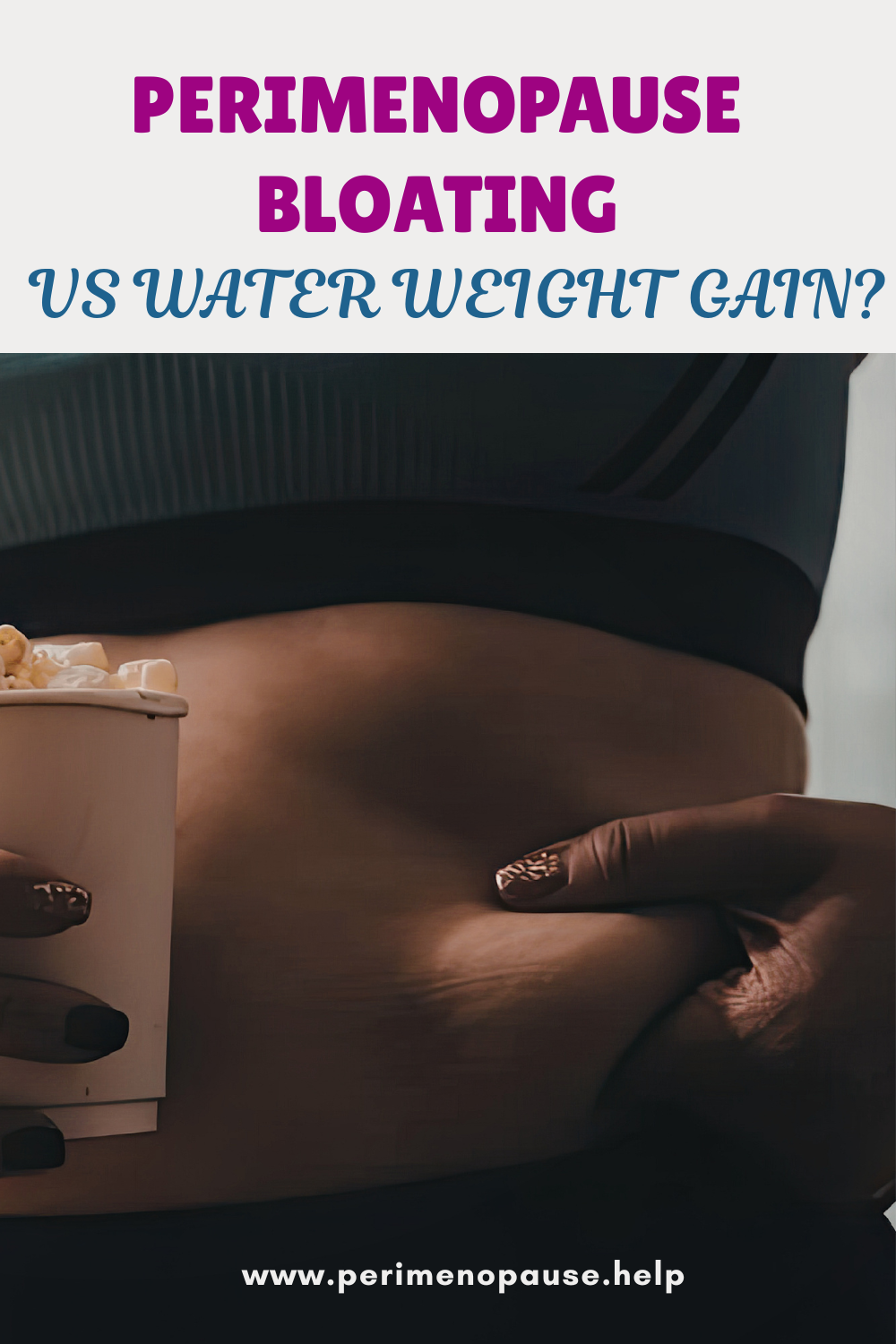
You wake up, look down, and your stomach looks six months pregnant.
Yesterday your jeans fit fine. Today they won’t zip. The scale climbs three pounds overnight, and you didn’t do anything differently. Welcome to perimenopause, where your body plays tricks on you daily, and nothing makes sense anymore. And worse yet, no one gives you a rule book!
Here’s the frustrating part: what you’re experiencing could be bloating, water weight, or both at the same time. They feel similar, look similar, and make you want to live in yoga pants forever. But they have completely different causes and completely different solutions.
Treating bloating like water retention doesn’t help, and treating water retention like bloating wastes your time and money on fixes that don’t work.
What You’re Actually Dealing With
If you press on your stomach and it feels tight like a drum, that’s bloating. If it feels soft and squishy, that’s water weight.
Bloating happens inside your digestive tract. Gas, usually due to fermentation, builds up in your intestines and stomach, stretching them out and creating that hard, uncomfortable pressure. You might hear gurgling sounds, feel sharp pains that move around, or notice your waistband cutting into you by midday even though you were fine at breakfast. Bloating is all about air, fermentation, and gas trapped where it shouldn’t be.
Water weight sits in your tissues. Your body holds onto extra fluid between your cells, under your skin, and around your organs. This creates that puffy, swollen feeling in your face, hands, ankles, and stomach. When you press on it, you might see a temporary indent that slowly fills back in (but not always, and sometimes it’s more evident in your ankles, feet, or toes). Water retention feels heavy and thick, not tight and pressurized.
Why Perimenopause Triggers Both Bloating and Water Weight Gain
Your hormones during perimenopause are a disaster zone, and both bloating and water retention feed off that chaos.
Estrogen swings wreck your fluid balance.
When estrogen spikes, which it does often in early to mid perimenopause, your body holds onto sodium. More sodium means more water retention. When estrogen drops suddenly, your digestive system slows down, food sits longer in your gut, and gas builds up. You can experience both problems in the same week, depending on where you are in your cycle or your phase of perimenopause.
Progesterone drops kill your digestion.
Progesterone keeps things moving through your intestines. As it gradually declines during perimenopause, your gut gets sluggish. Food ferments longer, bacteria produce more gas, and bloating becomes your daily reality. Low progesterone also makes your body more sensitive to salt, which amplifies water retention.
Cortisol levels stay elevated.
Perimenopause is stressful on your body, and stress hormones tell your system to hold onto everything, including water. Chronic cortisol elevation also slows digestion and increases inflammation, which contributes to both bloating and puffiness.
Your hormones aren’t just fluctuating. They’re often in complete chaos, which is why some days you wake up flat and other days you wake up looking like you swallowed a basketball.
Perimenopause Bloating vs Water Weight Gain: How to Tell Them Apart Without Guessing
Stop playing the guessing game. Here’s how to know exactly what you’re dealing with.
- Time of day matters. Bloating typically gets worse as the day goes on because gas and fermentation builds up from eating. Water retention is usually worse in the morning or after sitting for long periods because gravity pulls fluid down into your tissues.
- Location tells the story. Bloating centers in your belly and sometimes your upper abdomen, right under your ribs. Water weight shows up in your face, fingers, ankles, and lower belly, but rarely causes upper abdominal tightness.
- The press test works. Push on your stomach. If it bounces back immediately and feels firm, that’s gas and bloating. If you leave an indent that takes a few seconds to disappear, that’s water retention. You can also often see indentations in your ankles or feet from water weight gain/retention.
- Sound and movement are clues. Bloating comes with noises, rumbling, and shifting pains that move around your abdomen. Water weight just feels heavy and doesn’t make noise or shift.
- Your clothes fit differently. Bloating makes your waistband unbearable, but your rings and shoes still fit. Water retention makes your rings tight, your shoes snug, and your face puffy, not just your pants.
Once you identify which one you’re dealing with, you can stop wasting time on solutions that don’t match your actual problem.
What Actually Helps Perimenopause Bloating vs Water Weight Gain
Bloating and water weight require opposite strategies. Here’s what helps for each.
For Bloating:
- Eat smaller, more frequent meals during the day and have a fasting period overnight. Large meals stretch your stomach and create more opportunity for gas production. Smaller portions digest faster and produce less fermentation. Try to fast overnight for at least 12 hours to give your gut time to repair and restore motility (your gut’s cleaning-out mechanism).
- Cut back on fermentable carbs temporarily. Foods high in FODMAPs like beans, onions, garlic, wheat, and certain high sugar fruits can feed gut bacteria that produce gas. Reducing them for two weeks can dramatically flatten your belly. This is a good test but not necessarily the best long term eating plan. If you find this helps try exploring if you have SIBO (via a breath test) or Dysbiosis (via a stool test). A functional medicine or integrative health care practitioner should be able to help you with this. Also check out this blog for more on perimenopause and menopause and how they affect your gut.
- Chew thoroughly and eat slowly. Swallowing air while you eat contributes directly to bloating. The slower you eat and the more you chew, the less air you take in. This also helps repair your motility, leads to less stress signaling so a better cortisol rhythm, and helps you feel full faster and eat less.
- Try a quality probiotic with multiple strains. Gut bacteria balance affects how much gas your system produces. A probiotic with Lactobacillus and Bifidobacterium strains can reduce bloating within two to four weeks. Here are some of my favorites: SEED DS-01 or Metagenics UltraFlora Complete Probiotic.
 We earn a commission if you make a purchase, at no additional cost to you.09/14/2026 01:06 pm GMT
We earn a commission if you make a purchase, at no additional cost to you.09/14/2026 01:06 pm GMT
We earn a commission if you make a purchase, at no additional cost to you.09/14/2026 01:06 pm GMT - Move your body after eating. A 10-minute walk after meals stimulates digestion and helps gas move through your system rather than sit and ferment.
For Water Retention:
- Drink more water, not less. When you’re dehydrated, your body panics and holds onto every drop. Drinking more signals that water is abundant, and your body releases what it’s storing.
- Cut sodium gradually but significantly. Processed foods, restaurant meals, and salty snacks make you retain fluid fast. Aim for under 2,000 mg of sodium per day and watch the puffiness drop within 48 hours.
- Alternatively, don’t cut sodium too aggressively High sodium from processed foods can worsen water retention—but going too low can backfire and make puffiness worse. Your body needs sodium for fluid balance, and when intake is too low (especially with high water intake or exercise), it may hold onto fluid more tightly. Focus on balance: limit processed foods, keep sodium consistent, and support electrolytes—not just water.
- Increase potassium-rich foods. Potassium balances sodium and helps flush excess fluid. Eat bananas, sweet potatoes, spinach, avocados, and oranges daily. In a pinch or during high sweat days, use an electrolyte powder.
- Elevate your legs for 15 minutes twice a day. Gravity is working against you all day. Lying down with your legs above your heart helps fluid drain from your lower body back into circulation so your kidneys can process it out.
- Limit alcohol and caffeine. Both dehydrate you, which triggers your body to hold onto water as a protective mechanism. Cutting back helps regulate your fluid balance naturally.
The fastest way to fail is to try to fix water retention with anti-bloating strategies or to treat bloating like a fluid problem. Match the solution to the actual issue.
Common Mistakes That Make Both Bloating and Water Weight Gain Worse
You’re probably doing at least one of these without realizing it’s sabotaging your progress.
Wearing tight clothes all day.
Compression around your midsection can slow digestion and trap gas. It may also restrict circulation, worsening fluid buildup in your legs and feet. Opt for looser fits during the day when possible and save tighter clothing for shorter periods.
Clinical Observation: I often see increased bloating and lower extremity swelling simply from prolonged compression, especially in women who sit for long periods.
Skipping meals to reduce bloating.
When you don’t eat consistently, your gut can become more reactive. Then when you finally do eat, you may produce more gas—not less. Regular meals help keep digestion steady, while an overnight fast still gives your gut time to reset.
Clinical observation: Irregular eating patterns can disrupt the migrating motor complex (MMC), which plays a key role in clearing gas and bacteria from the gut.
Drinking diuretic teas to “debloat.”
Diuretics pull water out of your body, which may temporarily reduce water retention—but they do nothing for gas in your intestines. If bloating is the issue, this can leave you more dehydrated without actually fixing the problem.
Clinical observation: Overuse of diuretics can increase aldosterone signaling, which may actually promote rebound fluid retention.
Cutting sodium too aggressively.
While processed foods can worsen water retention, going too low in sodium can backfire. Your body needs sodium for proper fluid balance, and when levels drop too low, it may hold onto water more tightly—especially in perimenopause.
Clinical pearl: Low sodium intake can trigger hormonal responses (like aldosterone and vasopressin) that increase fluid retention rather than reduce it.
Eating raw vegetables when you’re already bloated.
Raw veggies are harder to digest and can increase gas, especially when digestion is more sluggish in perimenopause. Lightly steaming or roasting makes them easier to break down and often reduces symptoms.
Clinical observation: Many raw vegetables are high in fermentable fibers (FODMAPs), which can increase gas production in sensitive guts. If you are sensitive to them be sure to look into a low FODMAPS diet and check out info on SIBO and Dysbiosis and my blog on gut health.
Ignoring your cycle patterns.
Even in perimenopause, your body still follows patterns. Bloating and water retention often align with hormonal shifts. When you track these patterns, you can get ahead of symptoms instead of reacting to them.
Clinical observation: Estrogen and progesterone fluctuations directly influence fluid balance, gut motility, and sensitivity to bloating.
If you’re tired of guessing and want a clear, step-by-step plan to balance your hormones, reduce bloating, and actually feel like yourself again…
👉 [Get instant access to my Perimenopause Reset Course here]
Stop guessing and start tracking—your body is giving you useful data every single day.
Your body isn’t broken. It’s just speaking a language you haven’t learned yet. Once you understand the difference between bloating and water weight—and match your approach to the root cause—you can finally get the relief you’ve been looking for.
Pay attention to the signals, adjust your strategy accordingly, and you’ll be surprised how quickly your body responds when you give it what it actually needs.

Dr. Shelley Meyer is a board-certified family physician and Institute of Functional Medicine-certified functional medicine physician, as well as a Registered Dietitian. She is passionate about helping women navigate the roller coaster of perimenopause and postmenopause. She has her own Functional Medicine Practice in Denver, Colorado.







Leave a Reply
You must be logged in to post a comment.