
Scroll through TikTok for five minutes, and you will see women claiming they have discovered the secret to erasing wrinkles with a simple prescription cream. But what happens if you put estrogen cream on your face? Let’s dive into the estrogen on your face trend!
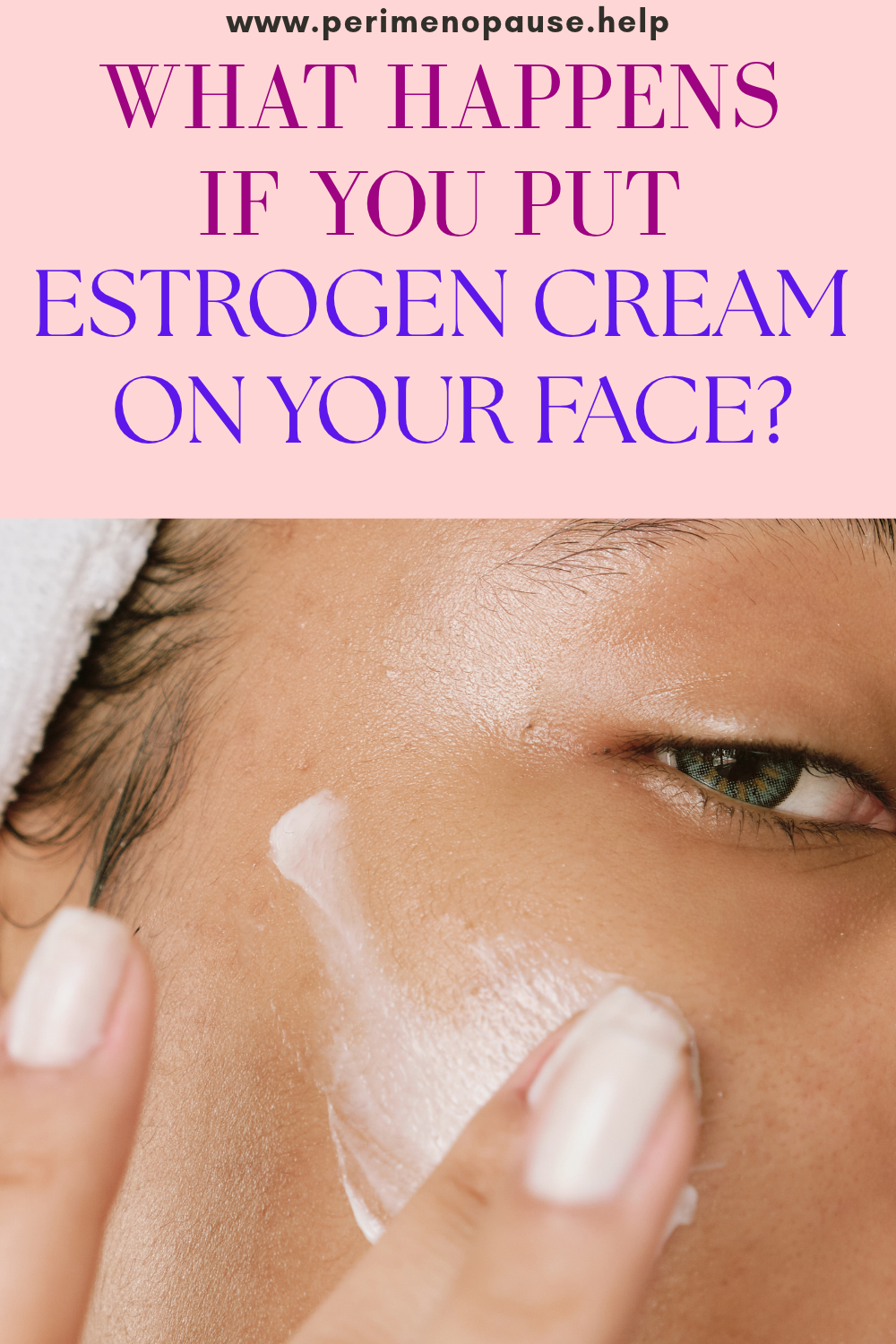
They are taking estrogen creams, vaginal preparations, and compounded hormones meant for other uses and putting them directly on their faces. Some claim dramatic results. Others end up with breakouts, brown spots, and hormonal symptoms they never had before. The truth is not as simple and is somewhere in between- it can help if used responsibly but it can also cause adverse estrogen related symptoms.
As a Certified Menopause Practitioner and Board-Certified Family Physician, I see the appeal and the danger in equal measure. The science behind estrogen and skin aging is real. The risks from doing this incorrectly are also very real.
In this guide, you will learn what actually happens when you put estrogen on your face, which types matter most, and how to avoid the common mistakes that lead to irritation, hyperpigmentation, and hormonal imbalance.
This blog is all about “what happens if you put estrogen cream on your face” and tips for using estrogen cream on the face safely!
Why Women Are Putting Estrogen Cream on Their Faces
The trend started because the underlying problem is completely legitimate.
During perimenopause and menopause, estrogen production plummets. Your skin responds by losing up to 30% of its collagen in just the first five years after menopause, and about 2.1% every year after that. Estrogen receptors are abundant in facial skin cells, particularly in your dermal fibroblasts. When estrogen drops, skin thickness decreases, elasticity collapses, moisture evaporates, and fine lines accelerate faster than ever.
The logic seems straightforward. If estrogen loss causes wrinkles, why not apply estrogen right where the wrinkles appear?
This is where it gets complicated, and where many people make critical mistakes.
The Three Products People Confuse and Why It Matters
Not all estrogen creams are the same, and the differences are not minor.
- Systemic estrogen gel: Designed to deliver hormones through your skin into your bloodstream for whole-body hormone replacement.
- Vaginal estrogen cream: Prescribed for genitourinary symptoms, formulated for mucous membranes, not facial skin.
- Compounded facial estrogen cream: Custom-made for topical facial application, often using estriol instead of estradiol.
This blog may contain affiliate links.
Using a vaginal cream on your face is off-label use. Off-label prescribing can be appropriate, but it should involve a deliberate conversation with your prescriber, not a guess based on what somebody posted online. Even when two products contain estradiol, the concentration and cream base differ. The amount you apply and the area you cover change your exposure dramatically.
The word estriol creates another misunderstanding. Estriol is an estrogen. Being described as weaker does not make it hormone-free or automatically suitable for everyone.
What You Need to Know Before You Start
Before you put any hormone product on your face, consider these critical questions.
Do you have a history that makes estrogen risky? If you have a history of hormone-sensitive cancer, unexplained vaginal bleeding, or have been told you need specialist guidance before using estrogen, do not start a facial hormone product without talking to your doctor first.
Is your skin sensitive or prone to pigmentation issues? Estrogen exposure can trigger melasma and hyperpigmentation, especially in people already susceptible to brown spots. Your face has thin, highly vascular skin, meaning products absorb faster and more completely than on other parts of your body.
Are you already on hormone replacement therapy? If you are already using HRT and you start applying extra estrogen cream to your face, you risk pushing your systemic estrogen levels too high. That leads to estrogen dominance symptoms like breast tenderness, unexpected spotting, bloating, abdominal weight gain, acne, and mood swings.
Ask your prescriber these four questions before moving forward and/or ask yourself these questions before applying estrogen to your face:
- What is the exact hormone and concentration in this product?
- Is this formulation specifically intended for facial use?
- What benefit are we aiming for, and over what time frame?
- How does my existing hormone treatment affect this decision?
The Difference Between Estriol and Estradiol
This distinction matters more than almost anything else.
Estriol is weak and binds preferentially to Estrogen Receptor Beta, which is concentrated in the facial skin tissue. The small studies showing skin improvements from topical estrogen used weak estriol at low concentrations, usually around 0.3%. Estriol has a much weaker systemic effect, meaning it is less likely to alter your overall hormone levels.
Estradiol is potent. If you grab a prescription vaginal estrogen cream like Estrace and put it on your face, you are using a product formulated for vaginal mucous membranes, not facial skin. This can be thick, it can clog pores, trigger breakouts, and stimulate melanocytes, leading to melasma and hyperpigmentation.
If you decide to use an estradiol product on your face despite these risks, follow these guidelines, and only use the lower dose vaginal estradiol option, not the comopounded estrogen cream or estradiol gel intended for systemic absorption:
- Use it only 2 to 3 times a week, the same frequency it is prescribed for vaginal use.
- Apply it after a lighter serum and in place of a moisturizer, not in addition to one.
- If you develop clogged pores, acne, or brown patches, stop immediately.
- Wear sunscreen every day. Small studies show that estradiol applied to sun-damaged skin can have the opposite effect on collagen.
There are some other low-percentage estradiol serums and creams to consider that won’t generally raise estradiol levels or contiribute to the above symptoms. I go into detail on this one below- but it’s one of my favorities: Quicksilver Facial Beauty Serum with ghk-cu copper peptides.
Common Mistakes That Lead to Problems
Applying more does not speed up results.
- Overuse leads to irritation, not faster wrinkle reversal. If you develop redness, burning, or unexpected changes, tell your prescriber. Do not assume the solution is to apply more or switch products on your own.
- Combining multiple active ingredients increases irritation risk. If you use a compounded formula with tretinoin, DMAE, vitamin C, and estriol in one product, your skin may react poorly even if each ingredient is safe individually.
- Skipping sun protection negates the benefits. Estrogen can increase photosensitivity, and UV exposure breaks down collagen faster than estrogen can rebuild it. Daily broad-spectrum SPF 30 or higher is non-negotiable.
- Not tracking your symptoms or hormone levels is a gamble. We do not have long-term clinical trials evaluating the safety of daily topical facial estrogen over years. Track your symptoms. Check your hormone levels with your doctor. Open up the discussion so your care can be individualized.
Effective Alternatives That Build Collagen Without Hormones
You can rebuild collagen without altering your hormone levels. If you want to try boosting your collagen and skin health without using hormones consider the following:
Start with proven, non-hormonal topicals:
- Topical Vitamin C and Antioxidants: Essential cofactors for collagen synthesis that protect against UV breakdown.
- Peptides and Growth Factors: Signal your fibroblasts to produce new collagen and elastin without hormonal activity.
- Retinoids or Bakuchiol: Increase cell turnover and thicken the dermis. Bakuchiol is a natural antioxidant extracted from the Babchi plant that offers anti-aging benefits similar to retinol but without the harsh side effects.
Support collagen production from the inside out with targeted amino acid complexes, hydrolyzed collagen peptides, and antioxidants like Pycnogenol and CoQ10.
Build a routine that starts with daily broad-spectrum SPF 30 or higher, a gentle cleanser, and a moisturizer with ceramides and hyaluronic acid. Then add treatments based on your main concern rather than buying an entirely new routine.
What About Compounded Facial Estrogen Products?
If you and your prescriber decide facial estrogen is appropriate, there are compounded options that combine several ingredients.
One example contains estriol 0.3 percent with CoQ10, alpha-lipoic acid, ascorbic acid, and DMAE. Another combines estriol 0.3 percent, vitamin C 5 percent, DMAE 3 percent, and tretinoin 0.01 percent. There are also manufactured facial serums that combine copper peptides with estrogens, along with ingredients like a vitamin C derivative, bakuchiol, and hyaluronic acid.
These are examples to discuss, not formulas everyone needs. Evidence for an individual ingredient does not establish that the entire combination works better. Combining several active ingredients can also increase irritation.
Being commercially available does not establish that a product is appropriate for everyone, and research on individual ingredients does not prove the finished serum has the same benefits. This has to be an individualized decision, particularly if you already use hormone therapy or have a history that affects estrogen safety.
You can build an effective skincare routine without facial estrogen. You can also build one safely with it, but only when you understand the risks, use the right type of estrogen, apply it correctly, and track your response with a knowledgeable provider. The choice is not between aging gracefully and taking a risk. The choice is between guessing and getting it right.
Some of my favorite facial serums (one contains a low percentage of estradiol, peptides, and bakuchiol, and the other is all herbal)
I love the following items:
- Quicksilver Facial Beauty Serum: This product is light and gentle and combines copper ghk-cu peptides for anti-aging, bakuchiol (what I mentioned above, like a retinol but gentler), a low dose of estradiol, and much more! You can save money with this link!
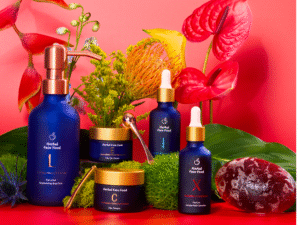
- Herbal Face Food: This product is also incredible- it packs a punch because of the amount of antioxidant plants it contains- and it smells so good! Herbal face good contains 25 of the world’s most powerful botanicals including the top 5 rarest, most
expensive plant concentrates on the planet. The powerful, potent serum is packed with Anti-Oxidants and Anti-aging phytonutrients that heal your skin at the cellular level and address the top signs of aging. This product is pricey- but I really stretch mine out and just use a little at a time so one of the larger 1 ml bottles usually lasts me 3-4 months, all while still seeing an improvement in my skin texture, color, and elasticity. But don’t pay full price- they run sales and you can discount stack using my link and discount code: SHELLEYM50 (this allows you to get 50% off your first order)!
Hopefully this helped clear the confusion and explain how to both safely use estrogen cream on your face and/or try non-estrogen containing ingredients that can help build collagen!
You may also enjoy:
Ultimate Guide:Top 5 Picks for your Perimenopause Supplement Stack
Perimenopause and Itchy Skin: 5 Expert Strategies for Relief!

Dr. Shelley Meyer is a board-certified family physician and Institute of Functional Medicine-certified functional medicine physician, as well as a Registered Dietitian. She is passionate about helping women navigate the roller coaster of perimenopause and postmenopause. She has her own Functional Medicine Practice in Denver, Colorado.






Leave a Reply
You must be logged in to post a comment.